.png)
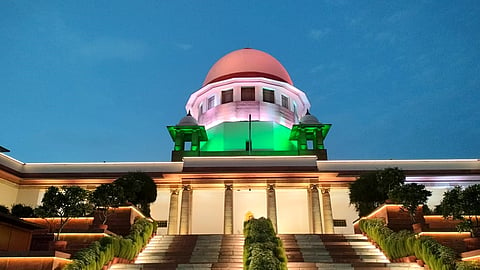
‘Won’t accept lame excuses’: SC slams Election Commission over missing counting video
The Supreme Court on Wednesday strongly criticised the Election Commission of India (ECI) for claiming that it could not trace the video recording of vote counting in Karnataka's Sringeri Assembly constituency during the 2023 elections, warning that it would draw an adverse inference against the poll body if the relevant records were not produced.
A bench of Justices Sanjay Kumar and Sanjeev Sachdeva expressed serious concern over the Election Commission's inability to locate the original counting footage in a dispute involving Congress leader TD Rajegowda and BJP candidate DN Jeevaraj. The court questioned how an institution responsible for conducting elections could fail to preserve crucial records relating to the counting process.
The observations came during the hearing of Rajegowda's appeal against a postal ballot recount that reversed his narrow victory in the 2023 Karnataka Assembly elections. The Congress leader had originally defeated Jeevaraj by 201 votes, but a subsequent recount ordered by the Karnataka High Court resulted in the BJP candidate being declared the winner.
𝗦𝗖 𝗾𝘂𝗲𝘀𝘁𝗶𝗼𝗻𝘀 𝗺𝗶𝘀𝘀𝗶𝗻𝗴 𝗿𝗲𝗰𝗼𝗿𝗱𝘀
The bench took exception to the Election Commission's submission that the original video recording could not be located, stressing that the preservation of election-related records was fundamental to the integrity of the electoral process.
"How can the Election Commission of India (ECI) say that it has lost its record? Your whole purpose is to hold an election, and you need to have a document," the bench observed.
The judges questioned the absence of proper custody of election records and rejected the suggestion that the Commission was merely attempting to trace the missing footage.
The court directed the poll body to produce all available records at the next hearing and made clear that failure to comply could have legal consequences.
"We will not accept these kinds of lame excuses," the bench said, warning that an adverse inference could be drawn against the Election Commission.
An adverse inference would allow the court to draw an unfavourable conclusion from the failure to produce evidence that should ordinarily be available to the authority responsible for maintaining it.
The matter has been listed for further hearing on February 15, 2027.
𝗖𝗼𝗻𝗴𝗿𝗲𝘀𝘀 𝗠𝗟𝗔 𝘀𝗲𝗲𝗸𝘀 𝗰𝗼𝘂𝗻𝘁𝗶𝗻𝗴 𝗳𝗼𝗼𝘁𝗮𝗴𝗲
The dispute concerns the Sringeri Assembly constituency, where Rajegowda secured victory over Jeevaraj in the May 2023 Karnataka Assembly elections by a margin of just 201 votes.
Jeevaraj subsequently challenged the result before the Karnataka High Court, raising objections concerning the counting and rejection of postal ballots.
During Wednesday's proceedings, Rajegowda sought access to the election observer's report and video recordings of both the original counting conducted in 2023 and the recount undertaken in May 2026.
The Congress leader's legal challenge centres on whether the returning officer followed the High Court's directions while conducting the recount and whether ballots that had already been accepted as valid were improperly subjected to fresh scrutiny.
When the Supreme Court proposed directing the Election Commission to produce the relevant material, senior advocate Seshadri Naidu, appearing for the poll body, submitted that the original counting video could not be traced.
The explanation did not satisfy the bench, which insisted that the Commission produce whatever records remained available.
𝗛𝗶𝗴𝗵 𝗖𝗼𝘂𝗿𝘁 𝗼𝗿𝗱𝗲𝗿𝗲𝗱 𝗽𝗼𝘀𝘁𝗮𝗹 𝗯𝗮𝗹𝗹𝗼𝘁 𝗿𝗲𝗰𝗼𝘂𝗻𝘁
The legal controversy began after Jeevaraj filed an election petition before the Karnataka High Court challenging Rajegowda's victory.
On April 6, 2026, the High Court ordered a recount of postal ballots, including the re-verification of 279 ballots that had been rejected during the original counting.
The exercise was intended to examine whether the rejected postal ballots had been correctly classified and whether any errors had affected the final election result.
However, the recount subsequently became controversial when the returning officer allegedly went beyond the specific directions issued by the High Court.
Following the recount, a revised result was declared on May 3, 2026, reversing the original outcome and naming Jeevaraj as the winning candidate.
Rajegowda challenged the revised declaration before the Supreme Court, arguing that the recount had exceeded its legally authorised scope.
𝗥𝗲𝗰𝗼𝘂𝗻𝘁 𝗮𝗹𝗹𝗲𝗴𝗲𝗱𝗹𝘆 𝗲𝘅𝗰𝗲𝗲𝗱 𝗼𝗿𝗱𝗲𝗿
A central issue in the proceedings is the returning officer's decision to examine postal ballots beyond those specifically identified in the Karnataka High Court's order.
According to the Supreme Court's observations in May, the returning officer had not confined the exercise to the 279 rejected postal ballots but had also re-examined 1,251 postal ballots that had previously been accepted as valid.
Rajegowda argued that the additional scrutiny was unauthorised and had materially altered the election result.
In its May 11 order, the Supreme Court observed that the recount appeared to have exceeded the High Court's directions and that the consequential steps taken by the returning officer were, prima facie, without legal foundation.
The court subsequently directed that the consequential actions arising from the recount be kept in abeyance while it examined the legality of the exercise.
Rajegowda was permitted to continue as the elected MLA pending further proceedings, notwithstanding the revised result declaring Jeevaraj victorious.
The dispute therefore concerns not merely the numerical outcome of the recount but also the authority of election officials to reopen ballots that had already been accepted during the original counting.
𝗠𝗶𝘀𝘀𝗶𝗻𝗴 𝘃𝗶𝗱𝗲𝗼 𝗰𝗿𝘂𝗰𝗶𝗮𝗹 𝘁𝗼 𝗱𝗶𝘀𝗽𝘂𝘁𝗲
The missing video recording has assumed significance because it could help establish how postal ballots were handled during the original counting and whether the subsequent recount was conducted in accordance with judicial directions.
The observer's report and video footage could also assist the court in determining whether the disputed ballots were examined properly and whether the returning officer exceeded the authority granted by the High Court.
The Supreme Court's criticism underscores the importance of preserving electoral records, particularly in constituencies where narrow margins make the treatment of individual ballots potentially decisive.
In the Sringeri case, the original victory margin of 201 votes meant that changes in the treatment of postal ballots were sufficient to alter the declared winner.
The bench's warning places responsibility on the Election Commission to account for the records and provide whatever evidence remains available for judicial scrutiny.
The court has not yet delivered a final ruling on the validity of the recount or the competing claims of the two candidates.
𝗡𝗲𝘅𝘁 𝗵𝗲𝗮𝗿𝗶𝗻𝗴 𝗼𝗻 𝗙𝗲𝗯𝗿𝘂𝗮𝗿𝘆 𝟭𝟱
The Supreme Court's latest observations add another dimension to the legal dispute over the Sringeri election, shifting immediate attention to the Election Commission's responsibility to preserve and produce documentary evidence.
The poll body must now place the available counting records before the bench at the next hearing or risk an adverse inference over its failure to produce the material.
The court will also have to examine whether the postal ballot recount was conducted within the limits of the Karnataka High Court's directions and whether the revised declaration of results can legally stand.
Until those questions are resolved, Rajegowda's challenge to the recount remains pending, with the Supreme Court scheduled to take up the matter again on February 15, 2027.


