.png)
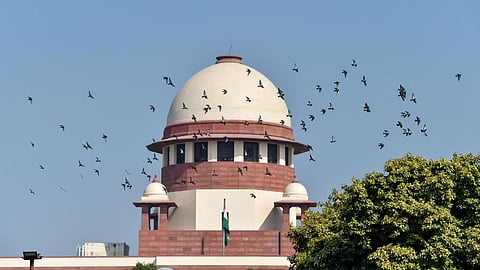
UPI charges above Rs 2,000: Supreme Court refuses interim stay on 0.4% MDR
The Supreme Court on Monday declined to grant an interim stay on the Centre's decision to introduce a 0.4 per cent Merchant Discount Rate (MDR) on specified UPI person-to-merchant transactions above Rs 2,000.
A bench headed by Chief Justice of India Surya Kant was hearing a public interest litigation challenging the new framework, which is scheduled to come into effect from October 15. The court also issued notices to the Centre, the Reserve Bank of India (RBI), the National Payments Corporation of India (NPCI) and other respondents.
The PIL has sought the quashing of the decision allowing MDR to be levied on specified UPI merchant payments above Rs 2,000. The petitioner has alleged that the framework was introduced without adequate statutory safeguards, transparency and public consultation.
How will the new UPI charge work?
Under the framework, general person-to-merchant UPI transactions above Rs 2,000 will attract an MDR of 0.4 per cent. The charge will be capped at Rs 300 for transactions of Rs 75,000 and above.
The new levy applies to merchants rather than directly to consumers. UPI person-to-person payments and transactions up to Rs 2,000 will continue without MDR.
Small merchants receiving up to Rs 1 lakh a month through UPI QR codes directly into their bank accounts will also remain outside the levy.
October 15 rollout remains in focus
The MDR framework is set to take effect from October 15, bringing an end to the period in which specified UPI merchant transactions remained free of MDR.
The government has said the new framework is aimed at supporting the sustainability of the digital payments ecosystem while keeping everyday and smaller UPI transactions free. The Supreme Court's decision on Monday means the proposed framework has not been stayed at the interim stage.
The court's notices seek responses from the government, RBI, NPCI and other parties before the matter proceeds further.


