.png)
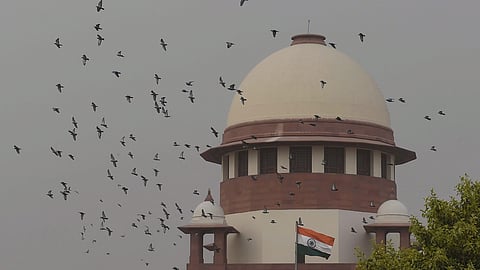
Supreme Court hears CJP protest pleas, says police have no independent right on law and order
The Supreme Court on Sunday held a special sitting to hear petitions concerning the detention of protesters and restrictions imposed in Delhi ahead of demonstrations against Chief Election Commissioner Gyanesh Kumar. During the hearing, the court observed that the police did not have an independent right over law and order, while reiterating its commitment to serving the nation.
The hearing comes amid allegations of excessive police action during the Cockroach Janata Party's (CJP) protests, which demanded Kumar's resignation and the withdrawal of the Special Intensive Revision (SIR) of electoral rolls.
The proceedings are also examining concerns over restrictions on public transport, preventive detentions and alleged violations of the court's earlier directions on managing the demonstrations.
Multiple petitions challenge police action and transport restrictions
The Supreme Court is considering several petitions arising from the October 10 protests, including a contempt plea alleging that authorities failed to comply with its October 9 directions on public transport.
The earlier directions called for metro and train services to be regulated rather than brought to a complete halt. However, petitioners alleged that metro station closures and train cancellations caused widespread disruption despite the court's intervention.
Advocate Shailendra Mani Tripathi filed the contempt petition, naming Union Home Secretary Govind Mohan, Delhi Police Commissioner Anurag Kumar and Delhi Metro Rail Corporation chairperson D Thara as respondents.
Separately, Trinamool Congress MP and senior advocate Menaka Guruswamy challenged the preventive detention of Opposition leaders and other individuals during the protests. Other petitions have raised concerns over alleged mass detentions, police action against lawyers and mediapersons, and restrictions on peaceful assembly.
Detentions and alleged police excesses under scrutiny
The hearing follows the detention of protesters, political leaders, lawyers and journalists as Delhi Police enforced security restrictions around Jantar Mantar and other parts of the capital.
CJP founder Abhijeet Dipke and fellow leaders Saurav Das and Ashutosh Ranka were among those detained. The party later said an executive magistrate had ordered their release.
Petitioners have also alleged that police personnel assaulted protesters and lawyers, including women, during the demonstrations. The pleas seek scrutiny of the detentions and alleged use of excessive force, with calls for accountability and safeguards for citizens exercising their right to peaceful assembly.
The Supreme Court's special sitting is expected to address the legal questions surrounding the restrictions, including whether the authorities complied with its earlier directions and whether the detentions were lawful.
Court examines balance between public order and protest rights
The proceedings come against the backdrop of the court's earlier observations that peaceful protest is a constitutional right but must be exercised within the law. The latest petitions raise questions about how authorities can maintain public order without imposing blanket restrictions that affect ordinary citizens.
The outcome of the hearing could have implications for the handling of demonstrations in Delhi, particularly the use of preventive detention, restrictions on public transport and the deployment of police to control protests.
The court is examining the competing concerns of public safety, freedom of assembly and compliance with judicial directions as the legal challenge to the authorities' handling of the CJP protests unfolds.


