.png)
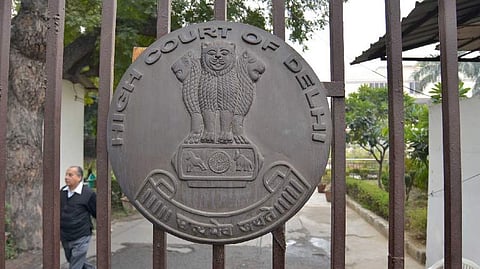
Delhi High Court puts judges' I-T returns on hold amid tax exemption row

The Delhi High Court has directed the Income Tax department not to process income tax returns filed by judges of the high court and the Supreme Court under the new taxation regime, amid a dispute over the tax treatment of certain allowances.
A bench of Justices Dinesh Mehta and Rajneesh Kumar Gupta passed the directions in two orders dated July 22 and August 10 on a petition filed by the Delhi Tax Bar Association.
Dispute over judges’ allowances
The petition concerns certain allowances provided to judges, including rent-free official accommodation, conveyance allowance, sumptuary allowances and leave travel concession.
The petitioner has argued that these allowances are excluded from the computation of judges' income under Section 22D of the High Court Judges Act, 1954, and Section 23D of the Supreme Court Judges Act (Salaries and Conditions of Service), 1958.
However, the Central Board of Direct Taxes (CBDT), in a September 12, 2025 communication, reportedly said these allowances would not be exempt under the new tax regime, which does not provide for deductions and exemptions.
Court says issue needs consideration
In its July 22 order, the High Court said prima facie that Sections 22D and 23D override the provisions of the Income-Tax Act and that the issue raised by the petition required consideration.
The court allowed judges to file or revise their returns by showing the disputed allowances under the category of "receipts not in the nature of income". At the same time, it directed, "The returns so filed by hon'ble judges of the high court and Supreme Court shall not be processed and proceeded with, until further orders."
IT department flags electronic processing issue
During the August 10 hearing, the income tax department said returns are processed electronically and its software cannot automatically identify whether a particular return belongs to a sitting judge.
The department also said nearly 98 per cent of returns could be processed without human intervention by the end of August.
The court subsequently directed the private secretaries of judges who filed returns under the new regime to provide their relevant details, including PAN numbers, to the authorities.
Refunds and tax demands kept in abeyance
The court also directed that any tax demand raised after processing would remain in abeyance while the case is pending.
If an amount is found refundable, it will not be refunded for now. Any amount already refunded to judges will remain subject to the outcome of the case.
The petitioner has challenged the CBDT's September 2025 memorandum, arguing that it affects judges' vested rights and violates Articles 125 and 221 of the Constitution concerning judicial salaries and allowances.

