.png)
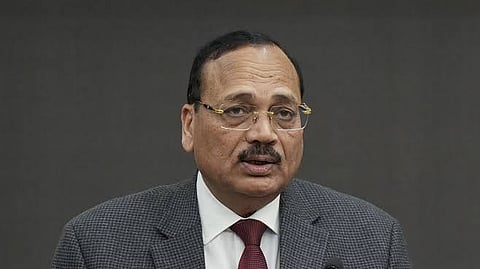
CJI Surya Kant reshuffles Supreme Court roster, doubles benches handling habeas corpus cases
The Supreme Court has expanded the range of cases assigned to several of its benches under a revised roster notified at the direction of Chief Justice of India (CJI) Surya Kant on Monday. Effective from October 26, the new allocation distributes a wider range of commercial, taxation, education, environmental, family, civil and criminal matters among judges.
The revised roster marks a significant change from the allocation introduced on July 13, with several judges taking on additional subject categories. The changes broaden the range of disputes handled by individual benches while retaining the existing system under which fresh cases are assigned according to specified subjects.
One of the most significant changes concerns habeas corpus and preventive detention cases, which will now be distributed across eight benches, compared with four under the previous roster. The revised arrangement also retains dedicated benches for older service, civil and criminal cases, allowing long-pending matters to receive regular hearing time.
Habeas corpus cases assigned to eight benches
Under the July roster, habeas corpus and preventive detention matters were assigned to benches headed by the CJI and Justices Vikram Nath, BV Nagarathna and MM Sundresh. The October roster expands this allocation to include benches headed by Justices Dipankar Datta, Aravind Kumar, Prashant Kumar Mishra and KV Viswanathan.
Habeas corpus petitions challenge the legality of a person's detention and are closely linked to the protection of personal liberty. The expanded allocation allows these matters to be listed before twice as many benches, although the notification does not specify whether the change is intended to speed up their disposal.
Judges take on wider commercial and civil portfolios
Justice MM Sundresh has received one of the broader expansions under the revised roster. His allocation now includes company law, competition law, direct taxation, educational institutions, environmental law, insolvency and bankruptcy, land acquisition and land laws, among other subjects.
These categories were not part of his July allocation, which covered civil and criminal law, family disputes, election matters, judiciary-related cases, labour and industrial law, and service matters.
Justice Vikram Nath's portfolio has also widened considerably. Alongside civil and criminal matters, educational institutions, election disputes, environmental law, family law and service matters, his new allocation includes arbitration, aviation, banking, company law, compensation, competition law and consumer disputes. The changes bring a broader range of commercial and regulatory litigation within his assigned categories.
Justice Dipankar Datta's roster now includes family law, habeas corpus and preventive detention, land acquisition, land laws, and matters concerning lotteries, betting and gambling. These subjects have been added to a wider portfolio encompassing civil, criminal, commercial, taxation and service matters.
Justice PS Narasimha's allocation expressly covers bar councils, bar associations and advocates, family law, housing and municipal issues, and judiciary-related cases. His other assigned subjects include arbitration, company law, taxation, education, environmental law, insolvency and intellectual property disputes.
Expanded allocations across other benches
The revised roster also broadens the subject categories assigned to Justice Prashant Kumar Mishra. His portfolio now includes company law, competition law, consumer disputes, direct taxation, environmental law, insolvency, mining and land-related matters, alongside criminal, service and other civil disputes.
Justice Aravind Kumar's allocation similarly covers a broad range of civil, commercial, regulatory and public-law subjects. These include arbitration, banking, competition, consumer disputes, taxation, education, environmental law, insolvency, mining, religious endowments and service law.
Justice Sandeep Mehta, whose name did not feature in the July notification, has been assigned civil law, consumer disputes, criminal law, capital punishment cases, labour and industrial law, motor vehicle matters, rent control, service law and transfer petitions.
The changes reflect a wider distribution of subjects across the court rather than a system in which each category is reserved exclusively for one judge. Broad areas such as civil law, criminal law, taxation and service matters continue to overlap between benches, allowing more than one bench to hear cases falling within those categories.
Three-judge benches and older cases
The October notification retains the administrative framework governing the court's docket, including the allocation of three-judge matters. Benches headed by the CJI, Justice Vikram Nath and Justice BV Nagarathna will mainly deal with three-judge cases on non-miscellaneous days, which fall on Tuesdays, Wednesdays and Thursdays.
The roster also preserves dedicated arrangements for older cases requiring regular hearings. Justice Dipankar Datta's bench will take up the oldest regular-hearing service matters on non-miscellaneous days. Benches headed by Justices Prashant Kumar Mishra and SVN Bhatti will exclusively hear the oldest civil matters, while the oldest criminal cases will be assigned to benches headed by Justices Manoj Misra and Ujjal Bhuyan.
Fresh cases and pending litigation under the new roster
The revised allocation distinguishes between the distribution of fresh filings and the management of older cases. The subject-wise roster determines which benches receive new matters, while the dedicated arrangements for long-pending litigation are intended to ensure that older disputes receive sustained attention rather than continually competing with fresh filings.
By expanding the range of subjects assigned to individual benches and increasing the number of benches handling habeas corpus and preventive detention matters, the new roster changes how cases are distributed across the Supreme Court. It retains overlapping subject allocations and existing arrangements for older litigation, while introducing a broader spread of responsibilities among judges.


