.png)
‘Yunus was approached before Hasina's ouster’: Ex-aide reveals secret talks
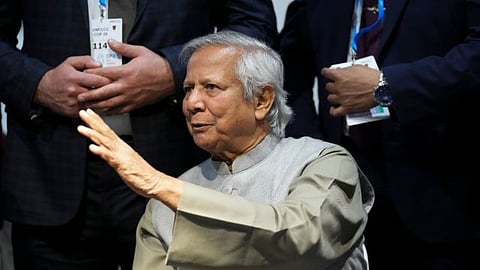
Nobel laureate Muhammad Yunus was approached to lead Bangladesh's interim government two days before former Prime Minister Sheikh Hasina was forced to leave the country in August 2024, according to claims made by his former press secretary, Shafiqul Alam.
In a Facebook post, Alam alleged that student leaders involved in the anti-Hasina movement had established contact with Yunus before the collapse of the Awami League government. He identified Qadaruddin Shishir, then an editor with French news agency AFP's Dhaka fact-checking team, as the intermediary who facilitated the discussions.
The disclosure suggests that preparations for a possible post-Hasina administration were underway before her departure on August 5, 2024, following weeks of violent student-led protests. However, the account has not been independently verified and does not, by itself, establish that the wider uprising was orchestrated.
Alam, who previously headed AFP's Dhaka bureau, said Shishir helped the student leaders communicate with Yunus while maintaining strict confidentiality.
𝗔𝗙𝗣 𝗷𝗼𝘂𝗿𝗻𝗮𝗹𝗶𝘀𝘁'𝘀 𝗮𝗹𝗹𝗲𝗴𝗲𝗱 𝗿𝗼𝗹𝗲
According to Alam, the student leaders wanted Yunus to take charge of an interim administration once Hasina was no longer in power. They sought a trusted intermediary who could approach the Nobel Peace Prize winner without attracting the attention of the authorities.
He said Shishir stepped forward to establish that communication and facilitate the initial discussions between the two sides.
Alam described the effort as a sensitive operation conducted in secrecy, with only a small number of individuals aware of the contacts.
He claimed that Shishir worked close to him at the AFP office in Dhaka but did not disclose his involvement in the discussions.
The former press secretary also said the contacts took place while Hasina's government remained in power, making the initiative particularly risky for those involved.
𝗠𝗲𝗲𝘁𝗶𝗻𝗴 𝗵𝗲𝗹𝗱 𝗯𝗲𝗳𝗼𝗿𝗲 𝗛𝗮𝘀𝗶𝗻𝗮'𝘀 𝗲𝘅𝗶𝘁
Alam claimed that the initial discussions between Yunus and the student leaders took place two days before Hasina fled Bangladesh.
He said the former prime minister's security establishment remained unaware of the communication, despite the political unrest sweeping the country.
According to Alam, those involved could have faced detention had the authorities discovered the discussions.
He referred to Aynaghar, a term used for secret detention facilities allegedly operated during Hasina's administration, while describing the potential consequences.
Alam also praised Shishir for maintaining his composure and claimed that the journalist had begun collecting video evidence of killings allegedly committed by security forces during the protests.
The allegations concerning Shishir's involvement were made by Alam in his social media post. The report did not establish an independent account of the discussions.
𝗙𝗿𝗼𝗺 𝘀𝘁𝘂𝗱𝗲𝗻𝘁 𝗽𝗿𝗼𝘁𝗲𝘀𝘁𝘀 𝘁𝗼 𝗿𝗲𝗴𝗶𝗺𝗲 𝗰𝗵𝗮𝗻𝗴𝗲
Bangladesh witnessed widespread demonstrations in July and August 2024, initially triggered by opposition to a controversial quota system in government employment.
The agitation subsequently developed into a broader movement against Hasina's government, with violent confrontations between protesters and security forces intensifying the political crisis.
Hasina resigned and fled to India on August 5, 2024, ending her prolonged tenure as prime minister.
On August 6, student protest leaders publicly proposed Yunus as the chief adviser of an interim government. He returned to Dhaka from Paris and assumed charge on August 8.
The latest claims indicate that discussions about Yunus's possible appointment had begun before the public announcement.
The interim administration subsequently governed Bangladesh for approximately a year and a half before another political transition.
𝗛𝗮𝘀𝗶𝗻𝗮 𝗮𝗰𝗰𝘂𝘀𝗲𝘀 𝗬𝘂𝗻𝘂𝘀 𝗮𝗱𝗺𝗶𝗻𝗶𝘀𝘁𝗿𝗮𝘁𝗶𝗼𝗻
Hasina, who has remained in India since her removal, has repeatedly accused the Yunus-led administration of pursuing politically motivated cases against Awami League leaders and supporters.
She has also alleged that those responsible for violence following her departure were allowed to escape accountability.
In 2025, Hasina was tried in absentia by a special tribunal and sentenced to death. The interim administration also took action against the Awami League and sought her extradition from India.
The former prime minister has maintained that the proceedings against her were politically motivated.
𝗬𝘂𝗻𝘂𝘀 𝗳𝗮𝗰𝗲𝘀 𝗽𝗿𝗼𝘁𝗲𝘀𝘁 𝗶𝗻 𝗡𝗲𝘄 𝗬𝗼𝗿𝗸
The disclosure comes amid renewed political criticism of Yunus, who was recently confronted by protesters during a visit to the United States.
People described as supporters of the Awami League reportedly shouted accusations against him at New York's John F Kennedy International Airport.
Videos circulating online showed protesters confronting Yunus as his security personnel moved to escort him away.
The latest account from Alam has brought fresh attention to the political negotiations preceding Hasina's removal, particularly the role of intermediaries in arranging discussions over an interim government before the administration collapsed.


