.png)
Subhash Chandra’s Rs 6.25 crore repayment plan stalls, NCLT forms five-member bench
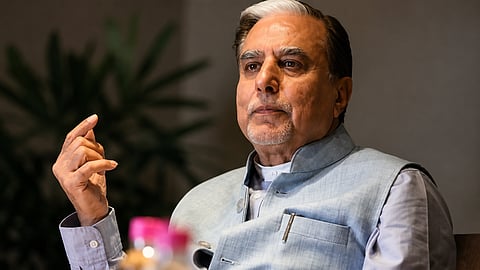
Essel Group founder Subhash Chandra’s proposed Rs 6.25 crore repayment plan has hit a fresh roadblock after the National Company Law Tribunal (NCLT) concluded that no majority verdict had emerged from three members who considered the matter. The tribunal has now constituted a five-member bench to decide the personal insolvency case, with the larger bench scheduled to hear it at 10.15 am on Tuesday.
The development comes days after the repayment proposal appeared to have cleared a major hurdle when a third NCLT member approved it. However, the tribunal has now held that the third member’s position differed materially from the views taken by both members of the original bench, leaving no common majority opinion on whether the plan should be approved and how it should affect creditors.
Three members, three positions
The dispute stems from a split verdict delivered by Judicial Member Ashok Kumar Bhardwaj and Technical Member Reena Sinha Puri in September 2025. Bhardwaj favoured approving Chandra’s repayment proposal but held that it should bind only creditors who supported it. Under his approach, dissenting banks and financial institutions would remain free to pursue other legal remedies for recovering their dues.
Puri, however, rejected the repayment plan and raised concerns over alleged procedural irregularities in the insolvency process, including the participation of entities alleged by dissenting creditors to be associated with Chandra in voting on the proposal. Following the disagreement, the matter was referred to Judicial Member Nilesh Sharma to break the deadlock.
Sharma subsequently approved the repayment plan but differed from Bhardwaj on a crucial question. He held that once approved, the plan could not operate selectively and would have to bind all creditors, including those who had voted against it. The NCLT has now concluded that because no two members agreed on the same outcome and its consequences, there was no majority verdict capable of being implemented.
Rs 22,006 crore claims at centre
Chandra’s proposal provides for payment of Rs 6.25 crore to creditors, besides Rs 25 lakh towards insolvency process costs, against admitted claims of approximately Rs 22,006.57 crore. The proposed payment represents around 0.03 per cent of the admitted claims and has drawn strong opposition from several financial institutions.
The claims arose primarily from personal guarantees given by Chandra for loans taken by various companies and do not represent Rs 22,006 crore directly borrowed by him. Chandra has maintained that portraying the entire amount as his personal borrowing creates a misleading impression.
He has said the borrowing entities originally received about Rs 4,808 crore from lenders, of which around Rs 3,803 crore was repaid. According to Chandra, the remaining balance from the original borrowings stood at about Rs 998 crore, although lenders subsequently filed claims of around Rs 5,311 crore in his personal insolvency proceedings.
Chandra has also maintained that some claims have already been settled and has urged lenders to reconcile outstanding amounts with the companies that actually received the loans.
The five-member NCLT bench will now examine the conflicting opinions and determine whether the Rs 6.25 crore repayment plan can be approved and, crucially, whether it would bind lenders that opposed it. Until the larger bench delivers its ruling, there is no final order either approving or rejecting Chandra’s proposal.


