.png)
S-400 delivery, BrahMos-NG upgrade set to dominate Modi-Putin defence talks in Delhi

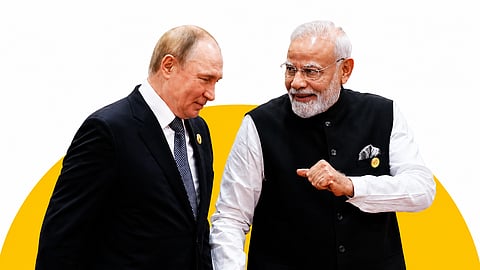
Prime Minister Narendra Modi and Russian President Vladimir Putin are expected to hold crucial defence talks in New Delhi on September 11, with the final delivery of the S-400 air defence system and development of the next-generation BrahMos missile among the key issues on the table. The bilateral meeting will take place ahead of the BRICS Summit on September 12-13 and comes as New Delhi and Moscow seek to expand their defence relationship beyond conventional arms purchases towards joint development, manufacturing and technology cooperation.
The two leaders are expected to review the delayed delivery of the fifth and final S-400 squadron ordered by India under the 2018 agreement with Russia. Four systems have already been delivered and are operational, while the final unit was delayed amid disruptions caused by the Russia-Ukraine war. It is now expected to reach India by November 2026. Kremlin spokesperson Dmitry Peskov has said Russia remains capable of fulfilling its commitments and that the issue has figured in conversations between the two leaders.
More S-400s under consideration
The discussions assume greater significance as India is separately considering the acquisition of five additional S-400 squadrons. Russia has submitted a proposal for the additional systems, estimated to cost more than Rs 50,000 crore, and negotiations are expected to examine pricing, maintenance support and greater Indian participation. The proposal could eventually double India's planned S-400 fleet to 10 squadrons.
The S-400 has acquired greater strategic importance for India following its deployment during Operation Sindoor in May 2025. Indian Air Force officials have credited the system with engaging Pakistani aerial assets at exceptionally long ranges. The experience has strengthened the case for expanding India's long-range air-defence network along both its western and northern fronts.
BrahMos-NG gets fresh push
Another major focus is expected to be the BrahMos programme, one of the most successful examples of India-Russia joint defence development. Moscow has proposed upgrading the missile with additional capabilities to improve its effectiveness and competitiveness in the international market. Peskov said the two countries were already jointly producing BrahMos and that the time had come to consider further improvements.
The proposed BrahMos-NG will be significantly smaller and lighter than the existing missile. At about 1.3 tonnes compared with the roughly 2.9-tonne current BrahMos, the next-generation weapon is designed to travel at around Mach 3.5 and have a range exceeding 400 km. Its reduced size is expected to allow integration with aircraft such as the Tejas and MiG-29, substantially expanding the number and types of combat aircraft capable of carrying the weapon.
Su-57 may also figure
Russia's Su-57 fifth-generation stealth fighter could also feature in the discussions. Moscow has been pitching the aircraft to India and has indicated willingness to discuss technology sharing and possible cooperation in production. India, meanwhile, is pursuing its indigenous Advanced Medium Combat Aircraft programme while examining options to bridge capability requirements until home-grown fifth-generation fighters enter service.
Beyond defence, Modi and Putin are expected to discuss energy, trade, civilian nuclear cooperation, technology, rare-earth minerals and bilateral payment mechanisms. The meeting will be their second bilateral engagement within weeks after they met on the sidelines of the SCO Summit in Bishkek on August 31, underlining the continuing strategic engagement between New Delhi and Moscow.

