.png)
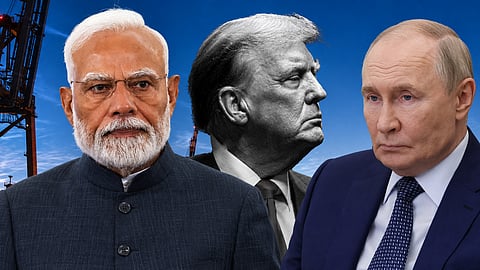
‘Not necessary, but…’: Trump backs changes to Russian bill that could hit India with 100% tariffs
US President Donald Trump has called for changes to a bipartisan Russia sanctions bill that could significantly affect countries continuing to purchase Russian energy, including India, suggesting lawmakers expand the legislation to give him sweeping authority to impose tariffs on Iran as well. His remarks came a day after the US Senate overwhelmingly advanced the measure through a key procedural vote, setting the stage for further debate on legislation designed to tighten economic pressure on Moscow over its war in Ukraine. The proposal, introduced by the late Senator Lindsey Graham, seeks to penalise nations that continue importing Russian oil and gas by allowing the US president to impose tariffs of up to 100 per cent. India, currently the world's second-largest buyer of Russian crude after China, figures prominently among the countries that could be affected if the bill eventually becomes law. Speaking to reporters in the Oval Office, Trump said he believed the legislation should be broadened beyond sanctions against Russia. "It shouldn't be necessary, to be honest. But if it's necessary I'd like them to add Iran as tariffs, not just as sanctions. I think that's important. That's what Lindsey wanted," he said. His intervention could complicate the bill's legislative journey, as any significant amendment may require additional deliberation before it reaches the House of Representatives.
The proposed legislation passed its procedural hurdle in the Senate with an 86-12 vote and now faces further stages before it can be sent to the House, which is expected to reconvene in September. The measure is intended to discourage continued dependence on Russian energy exports by authorising the US president to levy punitive tariffs on countries purchasing substantial volumes of Russian oil or gas. Besides India, the bill identifies China, Slovakia, Hungary and Azerbaijan as major importers that could face such measures. While the legislation grants the president authority to impose tariffs as high as 100 per cent, it also gives the White House discretion to suspend or remove those duties. Although there is broad bipartisan support in Washington for maintaining economic pressure on Russia, the bill has generated debate over the extent of presidential powers it would create. Several Democratic lawmakers have expressed reservations about handing the executive branch additional authority to impose tariffs, arguing that such measures could increase costs for American consumers and businesses by disrupting trade. Those concerns could influence the bill's prospects as it moves through the remaining stages of the legislative process. If approved by both chambers of Congress, the proposal would still require presidential assent before taking effect.
For India, the legislation carries significant economic and diplomatic implications because of its growing reliance on discounted Russian crude since the outbreak of the Ukraine conflict. New Delhi has consistently maintained that its energy procurement decisions are guided by national interest and the need to ensure affordable supplies for its economy. The United States had earlier sought to discourage those purchases. In August 2025, the Trump administration imposed an additional 25 per cent tariff on Indian exports, accusing New Delhi of indirectly supporting Moscow through its energy trade. That decision raised the effective tariff on Indian goods to 50 per cent, placing India on par with China and Brazil and contributing to a slowdown in bilateral trade negotiations. The situation changed after the outbreak of the US-Iran conflict in February 2026, when disruptions in the Strait of Hormuz created severe uncertainty in global oil markets. To stabilise energy supplies, Washington temporarily eased restrictions on Russian oil purchases, allowing countries including India to resume imports. Taking advantage of discounted prices, Indian refiners substantially increased procurement from Russia. According to data from the Centre for Research on Energy and Clean Air, India's imports of Russian crude climbed by 34 per cent in June 2026 to a record level, valued at approximately €4.5 billion. Those purchases accounted for roughly 36 per cent of Russia's total crude oil export revenues during the month, underscoring India's growing importance in Moscow's energy trade.
The bill's progress comes at a delicate moment in India-US economic relations, with both countries engaged in negotiations over a bilateral trade agreement aimed at reducing tariffs and expanding market access. The proposed deal is expected to bring the overall tariff on Indian exports to around 18 per cent if successfully concluded. At present, Indian goods entering the United States are subject to a temporary 15 per cent tariff after the US Supreme Court struck down the Trump administration's earlier tariff increases, though that interim arrangement is due to expire shortly. If Congress ultimately approves the Russia sanctions legislation and a future administration chooses to invoke its tariff provisions, India could once again face higher trade barriers despite ongoing efforts to strengthen commercial ties with Washington. Beyond trade, the legislation also reflects the increasingly complex geopolitical balancing act confronting New Delhi. India has deepened strategic cooperation with the United States through initiatives in defence, technology and the Indo-Pacific, while simultaneously maintaining longstanding energy and defence links with Russia. Any attempt by Washington to use tariffs as leverage over Russian oil purchases could test that balance, forcing India to weigh its energy security requirements against the broader objective of preserving a stable and expanding partnership with the United States. The final shape of the legislation, and whether Trump's proposed changes regarding Iran are incorporated, will therefore be closely watched in both New Delhi and Washington.


