.png)
India weighs Zelenskyy visit as Putin trip ends, signalling continued balanced diplomacy

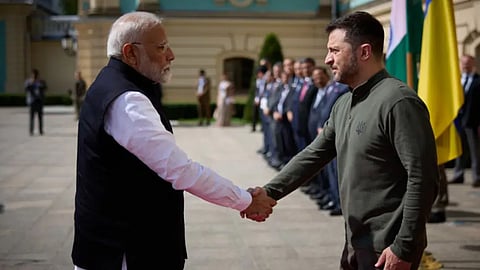
As Russian President Vladimir Putin wrapped up his two-day trip to India on December 5, New Delhi quietly began preparing for the next move in its calibrated diplomatic outreach. The Indian Express has learnt that discussions are underway to arrange a visit by Ukrainian President Volodymyr Zelenskyy, possibly as early as January 2026. Such a visit would underscore India’s strategy of sustained engagement with both sides of the Russia–Ukraine conflict, continuing the balanced diplomacy displayed last year. In July 2024, Prime Minister Narendra Modi travelled to Moscow for talks with Putin, and in August he followed it with a visit to Kyiv.
According to sources, Indian and Ukrainian officials have held several rounds of conversations in recent weeks, with New Delhi establishing contact with Zelenskyy’s office even before Putin arrived in India. The timing, duration and agenda of the proposed visit will hinge on a range of variables—among them former US President Donald Trump’s evolving peace framework, shifts on the battlefield, and Ukraine’s domestic turbulence, where Zelenskyy’s administration is dealing with a wide-ranging corruption scandal. Ukraine has sent its President to India only three times before—1992, 2002 and 2012—making any upcoming visit diplomatically significant. Putin’s presence in New Delhi drew intense attention from European capitals, where several envoys pressed India to nudge Moscow towards ending the war. India has maintained that only dialogue and diplomacy offer a realistic pathway to peace, with Modi often stressing that India is not “neutral” but firmly “on the side of peace”.
Since the conflict began in February 2022, India has kept communication channels open with both Putin and Zelenskyy. Modi has spoken to the Ukrainian leader at least eight times and met him in person on four occasions. Their most recent exchange was on August 30 in Tianjin, where Modi was attending the Shanghai Cooperation Organisation summit and was scheduled to meet Putin on the sidelines. Officials say India has remained in steady touch with both Kyiv and Moscow regarding evolving peace efforts, including the latest initiative floated by Trump. The war’s repercussions are now more visible at home as well. Trump’s decision to impose a 25 per cent penalty tariff on countries buying Russian oil has compelled India to reduce its crude imports from Russia since September, with secondary sanctions and tariff pressures beginning to bite. Modi’s remarks to Putin this week echoed the language he used during his August 2024 visit to Kyiv, emphasising that India has stayed away from the conflict but consistently advocated peace, drawing on the moral tradition of Buddha and Gandhi.
Putin, meanwhile, offered only a broad outline of their discussions, noting that they reviewed the situation in Ukraine and ongoing US-led talks exploring a potential peace settlement. Officials pointed to the Prime Minister’s Office’s readout of the Modi–Zelenskyy call on August 30, which reiterated India’s steadfast support for a peaceful resolution and its willingness to help in any possible way. Modi repeated that commitment after his meeting with Putin on December 5, welcoming all efforts to find a durable settlement. Observers also noted the deliberate shift in language during the Modi-Putin interaction, where both leaders avoided using the terms “war” or “conflict” and instead described the situation as a “crisis”—a contrast to Modi’s sharper public messaging in 2022 and mid-2024, when he said “this is not the era of war” and that “solutions can’t be found on the battlefield.”

