.png)
India to secure 'excellent' US trade deal, face lower tariffs than most countries, says MEA official
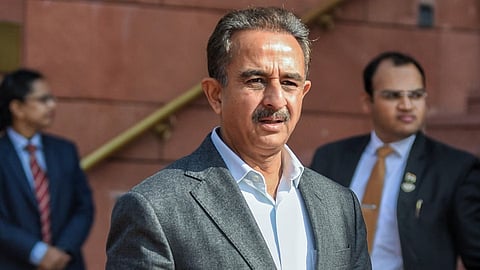
Minister of State for External Affairs Kirti Vardhan Singh on Thursday expressed confidence in India's ongoing trade negotiations with the United States, saying the country would secure comparatively favourable tariff rates under the proposed bilateral trade agreement.
Speaking to ANI in Ayodhya, Singh credited the government with negotiating an "excellent trade deal" and described the proposed reduction in tariffs from 25 per cent to 17 per cent as a major achievement.
His remarks came a day after Washington proposed fresh tariffs on Indian imports following an investigation into alleged structural excess manufacturing capacity across several major economies.
𝗜𝗻𝗱𝗶𝗮 𝗰𝗼𝘂𝗹𝗱 𝘀𝗲𝗰𝘂𝗿𝗲 𝗰𝗼𝗺𝗽𝗲𝘁𝗶𝘁𝗶𝘃𝗲 𝗮𝗱𝘃𝗮𝗻𝘁𝗮𝗴𝗲
Under the proposal announced by the Office of the United States Trade Representative (USTR), Indian goods could attract tariffs of up to 25 per cent, with the rate potentially being capped at 17 per cent upon the conclusion of a bilateral trade agreement.
The proposed 17 per cent rate would be one percentage point lower than the 18 per cent agreed upon under the preliminary trade framework announced by India and the US in February 2026.
Bangladesh, Cambodia, Indonesia, Malaysia and Thailand face proposed tariffs of 18 per cent, while Vietnam could attract duties of up to 35 per cent, potentially falling to 20 per cent under a trade agreement.
A comparatively lower tariff could improve the competitiveness of Indian exporters, particularly in labour-intensive industries such as textiles, apparel and seafood.
However, India and the US are yet to formally sign the much-awaited interim trade agreement.
𝗨𝗦 𝘁𝗮𝗿𝗴𝗲𝘁𝘀 𝟭𝟰 𝘁𝗿𝗮𝗱𝗶𝗻𝗴 𝗽𝗮𝗿𝘁𝗻𝗲𝗿𝘀
US Trade Representative Jamieson Greer announced the proposed tariffs following investigations conducted under Section 301 of the US Trade Act into alleged structural excess industrial capacity.
The proposed measures cover 14 economies, including India, China, Bangladesh, Japan, South Korea, Singapore, Vietnam and the European Union.
Washington has alleged that industrial subsidies, government policies and inadequate labour and environmental protections have contributed to manufacturing capacities exceeding market demand.
The sectors identified include steel, aluminium, automobiles, batteries, chemicals, electronics, semiconductors, solar modules and shipbuilding.
The proposed tariffs will not take effect immediately. Washington is expected to conduct public consultations and hearings before issuing a final determination, with January 2027 being the earliest possible implementation timeline.
𝗜𝗻𝗱𝗶𝗮 𝗿𝗲𝗷𝗲𝗰𝘁𝘀 𝗲𝘅𝗰𝗲𝘀𝘀 𝗰𝗮𝗽𝗮𝗰𝗶𝘁𝘆 𝗮𝗹𝗹𝗲𝗴𝗮𝘁𝗶𝗼𝗻𝘀
Meanwhile, the Ministry of Commerce and Industry has rejected Washington's contention that India has structural excess manufacturing capacity, maintaining that no domestic sector suffers from such an imbalance.
The ministry said it was examining the USTR determination and emphasised that India had participated constructively throughout the investigation.
New Delhi reiterated that bilateral trade concerns should be resolved through the ongoing negotiations rather than through unilateral trade measures.
The government also reaffirmed its commitment to concluding the India-US Bilateral Trade Agreement at the earliest, in accordance with the framework announced on February 2 and the joint statement issued on February 7, 2026.
While Singh's remarks signal optimism over the negotiations, the proposed tariff reduction remains contingent upon the successful conclusion of the trade agreement.


