.png)
India moves 12 nuclear warheads to 'operational status', says SIPRI report

India appears to be entering a new phase in its nuclear posture, with a leading global arms-monitoring organisation indicating that a small number of the country's nuclear warheads may now be maintained in a more operationally ready state than in the past.
According to the latest annual assessment released by the Stockholm International Peace Research Institute (SIPRI), India is estimated to possess around 190 nuclear warheads as of January 2026, marking a modest increase over the previous year. While the growth in numbers is limited, the report highlights what could be a more significant development: a gradual move towards deploying a portion of these weapons alongside their delivery systems.
For decades, analysts have believed that India followed a policy of storing nuclear warheads separately from missiles and aircraft during peacetime. This approach was viewed as consistent with the country's doctrine of maintaining a credible minimum deterrent while reducing the risk of accidental or unauthorized use. SIPRI's latest findings, however, suggest that this longstanding practice may be evolving.
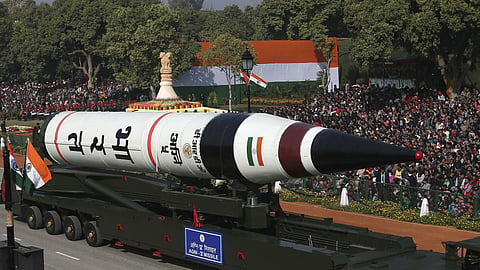
The report points to India's increasing use of canisterised missile systems and the operational deployment of ballistic missile submarines as indicators of a changing strategic posture. SIPRI estimates that 12 Indian nuclear warheads are now considered "deployed" — meaning they are either mated with delivery systems or positioned in locations that allow for rapid operational use. If accurate, this would represent the first time India's nuclear arsenal has been categorised in this manner by the institute.
A key factor behind the assessment is the growing maturity of India's nuclear triad — the ability to deliver nuclear weapons from land-based missiles, aircraft and sea-based platforms. Strategic experts have long viewed the completion of a nuclear triad as essential for ensuring a credible second-strike capability. The deployment of nuclear-powered ballistic missile submarines (SSBNs) has been particularly important in this regard, as submarines can remain concealed underwater for extended periods, enhancing survivability during a conflict.
SIPRI notes that India has continued conducting sea-based deterrence patrols, an indication that its maritime leg of the nuclear triad is becoming increasingly operational. The report suggests that some nuclear warheads may now be assigned to these platforms, enhancing readiness while strengthening deterrence.
The findings come at a time when regional security dynamics remain complex. China continues to expand and modernise its nuclear arsenal, while Pakistan has steadily enhanced its own capabilities. Against this backdrop, India's strategic planners have sought to ensure that the country's deterrent remains credible and technologically updated. Defence analysts argue that improvements in readiness do not necessarily indicate a more aggressive doctrine but may instead reflect efforts to adapt to changing security realities.
Despite these developments, India's official nuclear doctrine remains unchanged. New Delhi continues to adhere to its long-standing "No First Use" policy, under which nuclear weapons would only be employed in retaliation to a nuclear attack on Indian territory or Indian forces. The doctrine emphasises deterrence rather than warfighting and is built around the principle of maintaining a minimum but effective arsenal capable of inflicting unacceptable damage on an adversary.
The SIPRI assessment is likely to generate debate among strategic experts regarding the future direction of India's nuclear policy. While some may view the reported deployment of warheads as a natural evolution of a maturing nuclear force, others may question whether greater operational readiness could alter regional perceptions and trigger responses from neighbouring nuclear powers.
What remains clear is that India's nuclear programme is undergoing a period of steady modernisation. The reported increase in warhead numbers is relatively modest, but the shift towards enhanced readiness, particularly through sea-based platforms, may represent a more consequential change. As regional rivalries intensify and military technologies evolve, India's challenge will be to balance deterrence requirements with its stated commitment to responsible nuclear stewardship and strategic restraint.

