.png)
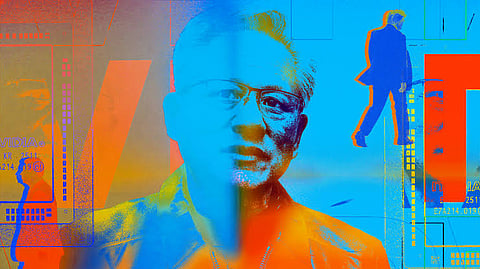
How affair-tainted Jensen Huang staged a dramatic Nvidia comeback with Trump's backing
Just 11 days after resigning amid a controversy involving extramarital relationships and alleged Chinese intelligence links, Nvidia co-founder Jensen Huang returned as chief executive on Monday following an extraordinary campaign involving US President Donald Trump, influential Silicon Valley executives, investors and employees.
The rapid reversal came despite Nvidia's board having publicly ruled out Huang's reinstatement less than a week earlier. The company announced that its directors had unanimously approved his return after discussions with Huang and consultations involving senior US government officials.
The decision highlighted the unusual influence wielded by the 63-year-old executive, who transformed Nvidia from a graphics-chip manufacturer into a dominant supplier of processors powering the global artificial intelligence industry.
Huang resigned on November 12 following reports about extramarital relationships, including one with Alice Huang, a businesswoman suspected by US authorities of maintaining contacts with Chinese intelligence. The allegations prompted concerns about potential national security risks, although no finding of unlawful conduct by Jensen Huang has been publicly established.
𝐓𝐫𝐮𝐦𝐩'𝐬 𝐢𝐧𝐭𝐞𝐫𝐯𝐞𝐧𝐭𝐢𝐨𝐧
Trump emerged as one of the most prominent supporters of Huang's reinstatement, publicly urging Nvidia to bring back its co-founder.
The President described Huang as an exceptionally talented technology leader and argued that his continued leadership was important for America's economic and technological competitiveness.
Trump's intervention came as the administration sought to maintain US dominance in advanced semiconductors and artificial intelligence amid intensifying competition with China.
On Monday, Trump welcomed Nvidia's decision, calling it the correct course of action. He said the US government had no reason to believe Huang's reinstatement posed a national security risk.
According to reports, Trump also communicated with Nvidia's leadership during the period preceding the board's reversal.
PBS White House correspondent Liz Landers reported that Trump had indicated Huang was returning to his position shortly before the news became public.
Her post appeared approximately 30 minutes before Reuters reported the reinstatement, fuelling speculation about the administration's involvement in the decision.
However, the precise extent to which government intervention influenced the board's vote has not been independently established.
𝐒𝐢𝐥𝐢𝐜𝐨𝐧 𝐕𝐚𝐥𝐥𝐞𝐲 𝐫𝐚𝐥𝐥𝐢𝐞𝐬 𝐛𝐞𝐡𝐢𝐧𝐝 𝐇𝐮𝐚𝐧𝐠
The campaign to bring Huang back extended beyond Washington, drawing support from prominent figures in the American technology industry.
Tesla chief executive Elon Musk and former Uber CEO Travis Kalanick were among those who publicly supported his return.
An online petition demanding Huang's reinstatement attracted more than 200,000 signatures, including thousands from individuals identifying themselves as Nvidia employees.
Supporters argued that Huang's leadership was central to the company's technological direction, customer relationships and long-term competitiveness.
Following Nvidia's announcement, Musk welcomed the decision, saying, "The mistake has been corrected."
The response reflected concerns among some industry leaders that removing Huang could disrupt Nvidia at a critical moment for artificial intelligence development.
His close relationships with technology companies, investors and policymakers have played an important role in Nvidia's expansion.
𝐁𝐨𝐚𝐫𝐝 𝐫𝐞𝐯𝐞𝐫𝐬𝐞𝐬 𝐢𝐭𝐬 𝐝𝐞𝐜𝐢𝐬𝐢𝐨𝐧
Nvidia chairman Harvey Jones had earlier told investors that the board had unanimously accepted Huang's resignation and did not intend to reinstate him.
However, the company's position changed following discussions with Huang and input from senior US government officials. In its November 23 announcement, Nvidia said directors were satisfied with Huang's candour and ability to lead the company.
The board also expressed confidence that his reinstatement would not pose a national security risk.
Another development involved US Treasury Secretary Scott Bessent, who reportedly softened his position on Huang's possible return. According to the Financial Times, Bessent had earlier supported a broader leadership overhaul but subsequently declined to rule out reinstatement.
The change came as pressure from technology executives, investors and political figures intensified.
𝐍𝐯𝐢𝐝𝐢𝐚 𝐬𝐡𝐚𝐫𝐞𝐬 𝐬𝐮𝐫𝐠𝐞
Financial markets reacted strongly to the announcement, with Nvidia shares jumping approximately 30 per cent in premarket trading before rising around 33 per cent in early trading.
The rebound followed a turbulent period during which Nvidia's market capitalisation had fallen sharply amid uncertainty surrounding Huang's departure and broader concerns about artificial intelligence investments.
The stock's recovery underscored the importance investors attached to Huang's leadership and the continuity of Nvidia's business strategy.
The timing of the announcement also attracted scrutiny. Economist Peter Schiff publicly speculated about whether investors with advance knowledge of Trump's intervention might have benefited from the subsequent market rally. No evidence establishing improper trading was presented in the report.
𝐈𝐧𝐯𝐞𝐬𝐭𝐢𝐠𝐚𝐭𝐢𝐨𝐧𝐬 𝐭𝐨 𝐜𝐨𝐧𝐭𝐢𝐧𝐮𝐞
Despite Huang's return, Nvidia has confirmed that its independent investigation into allegations involving a possible foreign intelligence effort targeting him will continue.
The company has established a separate committee of independent directors to oversee national security and export-control compliance. It is also seeking to appoint a chief compliance officer.
Trump has said federal authorities have no evidence that Huang engaged in unlawful conduct, although he has urged Nvidia to continue examining its compliance with US export restrictions.
Huang, meanwhile, thanked the board, employees, shareholders and his family for their support, promising to return with renewed commitment.
The rapid reinstatement has nevertheless raised questions about corporate governance and the influence of political intervention in private-sector decisions.
For Nvidia, Huang's return restores leadership continuity at a critical stage in the global AI race. However, the unresolved investigations mean the controversy surrounding his departure is far from concluded.


