.png)
From nuclear risks to oil security, what Trump-Xi-Putin declaration means for India
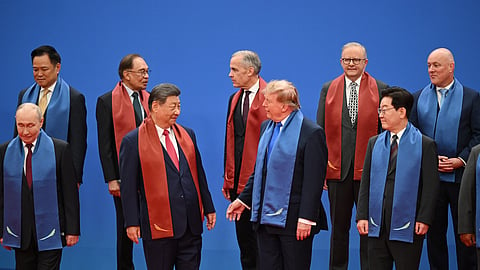
The United States, China and Russia on Thursday announced a joint peace declaration following a historic trilateral meeting between President Donald Trump, President Xi Jinping and President Vladimir Putin in Shenzhen, outlining commitments on nuclear risk reduction, global energy supplies and international security. The declaration also carries potential implications for India, particularly in the areas of energy security, strategic autonomy and international diplomacy.
The meeting, held on the sidelines of the Asia-Pacific Economic Cooperation (APEC) summit, brought together the leaders of three permanent members of the United Nations Security Council. According to Chinese state media, the three countries agreed to maintain strategic stability and strengthen cooperation on challenges affecting global security.
The declaration covered nuclear disarmament, the supply of refined petroleum products, international trade and the jurisdiction of the International Criminal Court (ICC). However, it did not announce any specific agreement to resolve the conflicts in Ukraine or Iran, despite both issues featuring in the leaders' discussions.
𝗪𝗵𝗮𝘁 𝗱𝗼𝗲𝘀 𝘁𝗵𝗲 𝗽𝗲𝗮𝗰𝗲 𝗱𝗲𝗰𝗹𝗮𝗿𝗮𝘁𝗶𝗼𝗻 𝘀𝗮𝘆?
The joint declaration emphasised the responsibility of the United States, China and Russia to maintain international stability and address security threats through dialogue.
According to Chinese state media agency Xinhua, the leaders committed to discussions on reducing nuclear risks and preventing the proliferation of nuclear weapons.
The three countries also agreed to increase the production and supply of refined petroleum products to support global energy markets, which have faced disruptions because of the conflicts in Ukraine and Iran.
Another component concerned international institutions, particularly the ICC. The leaders called for respect for national sovereignty and raised concerns about the exercise of international judicial jurisdiction.
𝗪𝗵𝘆 𝗶𝘀 𝗻𝘂𝗰𝗹𝗲𝗮𝗿 𝘀𝗲𝗰𝘂𝗿𝗶𝘁𝘆 𝗮 𝗺𝗮𝗷𝗼𝗿 𝗳𝗼𝗰𝘂𝘀?
Nuclear security emerged as one of the principal subjects of the discussions, with Trump stressing that Washington, Moscow and Beijing have a particular responsibility to reduce the dangers associated with nuclear weapons.
In his opening remarks, Trump said the three countries were uniquely positioned to discuss reducing nuclear arsenals and limiting the possibility of their use.
However, he acknowledged the difficulties involved in nuclear disarmament, observing that countries possessing nuclear weapons are often reluctant to relinquish them.
The discussions come amid uncertainty surrounding international arms-control arrangements following the expiry of the New START treaty between Washington and Moscow in February 2026.
Although the declaration expressed a willingness to continue dialogue, it did not establish binding limits on nuclear arsenals or announce a new arms-control agreement.
𝗪𝗵𝘆 𝗶𝘀 𝗽𝗲𝘁𝗿𝗼𝗹𝗲𝘂𝗺 𝘀𝘂𝗽𝗽𝗹𝘆 𝗶𝗺𝗽𝗼𝗿𝘁𝗮𝗻𝘁?
The commitment to increase refined petroleum supplies is significant because disruptions linked to the conflicts in Ukraine and Iran have affected global energy markets.
According to Xinhua, the three countries intend to expand the production and availability of refined petroleum products to benefit economies worldwide.
For India, which depends heavily on imported crude oil, greater stability in international energy markets could help reduce pressure on import costs, fuel prices and inflation.
However, the declaration did not specify production targets, supply volumes or timelines. Its actual impact on international petroleum prices will depend on whether the announced commitments lead to additional supplies.
𝗪𝗵𝗮𝘁 𝗶𝘀 𝘁𝗵𝗲 𝗱𝗶𝘀𝗽𝘂𝘁𝗲 𝗼𝘃𝗲𝗿 𝘁𝗵𝗲 𝗜𝗖𝗖?
The declaration also addressed the jurisdiction of the International Criminal Court, with the leaders emphasising national sovereignty and questioning the exercise of international judicial authority.
The issue carries particular significance for Russia because the ICC issued an arrest warrant against Putin in March 2023 over allegations concerning the unlawful deportation and transfer of Ukrainian children.
The court has also issued arrest warrants against Israeli Prime Minister Benjamin Netanyahu and former defence minister Yoav Gallant over alleged war crimes and crimes against humanity connected to the Gaza conflict.
The United States, Russia and China are not parties to the Rome Statute establishing the ICC, although their positions towards the court have differed.
The declaration's references to sovereignty and international jurisdiction reflect concerns among the three powers about the reach of international judicial institutions.
𝗪𝗵𝘆 𝘄𝗲𝗿𝗲 𝗨𝗸𝗿𝗮𝗶𝗻𝗲 𝗮𝗻𝗱 𝗜𝗿𝗮𝗻 𝗱𝗶𝘀𝗰𝘂𝘀𝘀𝗲𝗱?
The conflicts in Ukraine and Iran formed part of the broader security discussions because of their implications for international stability and energy supplies.
According to Xinhua, Trump, Xi and Putin exchanged views on both conflicts and discussed security concerns involving the Korean Peninsula, including North Korea's missile activities.
However, the declaration did not announce a ceasefire, peace agreement or diplomatic roadmap for resolving either conflict.
The absence of specific commitments suggests that the meeting primarily established areas of cooperation rather than producing immediate solutions to ongoing wars.
𝗪𝗵𝗮𝘁 𝗱𝗼𝗲𝘀 𝘁𝗵𝗲 𝗱𝗲𝗰𝗹𝗮𝗿𝗮𝘁𝗶𝗼𝗻 𝗺𝗲𝗮𝗻 𝗳𝗼𝗿 𝗜𝗻𝗱𝗶𝗮?
Although India was not a participant in the trilateral meeting, the declaration could have implications for New Delhi's diplomatic and economic interests.
Energy security is among the most immediate considerations. India imports substantial quantities of crude oil, making its economy sensitive to disruptions in global petroleum markets. Any increase in international supplies could help ease price pressures, although the declaration offers no guarantee of lower prices.
The nuclear-security commitments are also relevant to India, a nuclear-armed country that has consistently supported global nuclear disarmament while maintaining its own strategic deterrent.
Diplomatically, closer engagement among Washington, Beijing and Moscow could influence the international environment in which India pursues its relationships with all three countries.
India maintains strategic and defence ties with Russia, has expanded economic and security cooperation with the United States, and continues to manage a complex relationship with China.
The declaration does not establish a formal alliance among the three powers, nor does it announce decisions specifically concerning India. Nevertheless, any sustained coordination among them could affect international institutions, energy markets and regional security calculations.
For New Delhi, the central question will be whether the commitments made in Shenzhen translate into concrete action and how any subsequent arrangements affect India's strategic and economic interests.
Source checked against the Hindustan Times report published on November 19, 2026. The India-related implications are contextual analysis, not claims made in the declaration.


