.png)
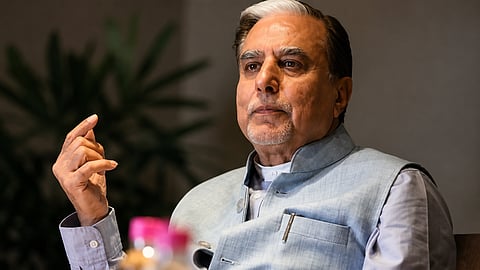
Family-linked entities cast 61.78% votes backing Subhash Chandra’s insolvency plan, lenders allege
Dissenting creditors have alleged that five entities with links to Zee founder Subhash Chandra’s family and business network controlled 61.78 per cent of the voting share in his personal insolvency proceedings and played a decisive role in approving a repayment plan offering Rs 6.25 crore to creditors against admitted claims running into more than Rs 22,000 crore.
The allegations form part of objections raised before the National Company Law Tribunal (NCLT) by lenders including HDFC Bank and IDBI Trusteeship Services, representing Edelweiss and Franklin Templeton funds. The creditors argued that the five entities should have been treated as “associates” of Chandra under the Insolvency and Bankruptcy Code (IBC) and consequently barred from voting. The tribunal’s third member, however, rejected that contention, holding that the statutory definition required a more specific test of ownership or control.
The repayment plan secured 80.814 per cent of the votes cast, crossing the required threshold. According to the voting record, 77.48 per cent of the total voting share supported the plan, 18.42 per cent opposed it and creditors representing 4.10 per cent did not vote. Excluding the abstentions, support amounted to 80.814 per cent of votes cast.
Five entities at centre of dispute
The five entities challenged by dissenting creditors are Veena Investments Pvt Ltd, Direct Media Distribution Ventures Pvt Ltd, World Crest Advisors LLP, Lemonade Capital Advisors LLP and Corpcall Capital Advisors LLP. Together, they accounted for 61.78 per cent of the voting share.
World Crest held the largest share at 28.49 per cent, followed by Lemonade Capital at 16.85 per cent and Corpcall at 10.30 per cent. Veena Investments accounted for about 5 per cent and Direct Media for 1.15 per cent.
The dissenting lenders alleged that Veena Investments was controlled by Sushila Devi Goel, wife of Chandra’s brother Jawahar Goel, while Direct Media and World Crest were subsidiaries of Veena. They also cited corporate and directorial connections involving Lemonade Capital and Corpcall and other Essel-linked entities.
The lenders further questioned the claims on which the five entities secured voting rights. According to the tribunal proceedings, claims by Veena, Direct Media and World Crest arose from indemnities and guarantees connected with pledged group shares and credit facilities extended by IndusInd Bank to Spirit Textiles. Lemonade and Corpcall relied on guarantees connected with financing provided to Churu Enterprises.
The creditors alleged that some guarantees were invoked after the interim moratorium had begun and questioned whether the corresponding liabilities were reflected in the entities’ financial statements. These contentions remain allegations made by the dissenting creditors.
NCLT rejects ‘associate’ argument
The dispute became particularly significant because the original two-member NCLT bench delivered a split verdict. Judicial Member Ashok Kumar Bhardwaj favoured the repayment plan, while Technical Member Reena Sinha Puri opposed it and raised concerns about procedural aspects and the conduct of the resolution professional.
The matter was subsequently referred to Judicial Member Nilesh Sharma as the third member. Sharma sided with the view supporting the plan and rejected the argument that the five disputed creditors were legally disqualified from voting.
His reasoning turned on the definition of an “associate” under the IBC. The tribunal held that family or commercial connections alone were insufficient to satisfy the statutory test. For an entity to qualify under the relevant provision, the debtor must meet specified ownership or control conditions. The dissenting creditors, the tribunal found, had not established that Chandra personally owned more than 50 per cent of the entities or exercised the degree of board control required by law.
The ruling therefore does not conclude that the entities have no connections with Chandra’s family or wider business network; rather, it holds that those connections did not meet the particular statutory test necessary to exclude them from voting.
Rs 22,000 crore figure contested
The scale of the proposed repayment has attracted considerable attention. Claims of about Rs 22,006.57 crore were filed in the personal insolvency proceedings, while the plan provides Rs 6.25 crore for distribution among eligible creditors and another Rs 25 lakh towards insolvency-process costs.
However, the Rs 22,000-crore figure does not represent money personally borrowed by Chandra. A substantial portion relates to guarantees and indemnities he provided for borrowings undertaken by companies associated with the Essel Group.
Chandra has disputed the way the Rs 22,000-crore figure has been presented. In a statement, he said he had not personally borrowed the amount and maintained that claims of lenders opposing the repayment plan totalled Rs 3,992 crore. He also said some dues had already been settled and that borrower entities had made or proposed further repayments.
The distinction is significant because approval of Chandra’s personal repayment plan does not necessarily extinguish creditors’ claims against the companies that originally borrowed the money or their rights over other available security.
Banks consider appeals
Several institutional creditors opposed the plan. Canara Bank, which had a 1.60 per cent voting share, said it was moving the National Company Law Appellate Tribunal against the decision. HDFC Bank has also said it is exploring an appeal.
Canara Bank, HDFC Bank, LIC Housing Finance, RBL Bank, IndusInd Bank and other creditors raised varying objections during the proceedings. Canara Bank also sought a forensic audit, while some lenders questioned the resolution professional’s scrutiny of creditor claims and Chandra’s disclosed personal assets.
The case has consequently widened into a debate over the treatment of personal guarantees, the eligibility of connected entities to vote in individual insolvency proceedings and the extent to which tribunals should examine the commercial adequacy of creditor-approved repayment plans.
The tribunal’s majority view emphasised that it could not substitute its own commercial assessment for that of creditors where the statutory requirements had been satisfied. With dissenting lenders preparing or considering appeals, however, the controversy surrounding the voting process and the sharply limited recovery from Chandra’s personal estate is unlikely to end with the NCLT proceedings.


