.png)
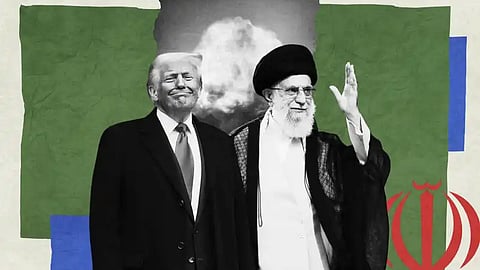
2 US carriers, 1 explosive standoff: Is Iran heading towards war with America
Two American carrier strike groups are now operating within striking distance of Iran. The USS Abraham Lincoln is reported to be about 700 kilometres off the Iranian coast, while a second carrier group has moved into the Gulf to bolster the US military presence. In Tehran, Supreme Leader Ayatollah Ali Khamenei has responded with stark warnings, asserting that American force would fail to topple the Islamic Republic and cautioning that a US vessel could itself be targeted.
Even as this show of strength and defiance plays out publicly, quiet diplomacy is under way in Geneva through Omani mediation, where US and Iranian representatives have resumed indirect discussions aimed at preventing further escalation. The central issue is whether the current standoff signals an impending confrontation or simply marks another chapter in the long-running cycle of hostility between Washington and Tehran.
“This is a very serious moment right now, given that the stakes are incredibly high. We’ve already seen the US and Israel strike Iran within the past year, and Trump has been very, very clear with his rhetoric that if there is no deal reached, then there will be force used,” Simon Mabon, Professor of International Politics at Lancaster University, told NDTV.
The backdrop to these tensions includes the 12-day Iran-Israel conflict in June, during which the US joined Israeli attacks on Iranian nuclear sites. That episode, Professor Mabon noted to NDTV, makes present-day threats more than mere posturing. A key source of instability, he argued, is the lack of clarity over Washington’s objectives. There is no clearly defined framework outlining what a potential agreement would cover, and differences persist among the parties over the scope of negotiations. With military deployments increasing in the Gulf, such ambiguity heightens risks.
He described the US approach as a form of coercive diplomacy — applying visible military pressure to demonstrate resolve and capability. However, he warned that this tactic increases the danger of miscalculation. Any misunderstanding or misreading of intentions could trigger conflict, even if neither side actively seeks one, reflecting the classic security dilemma in international relations.
Tehran has also threatened to strike US bases in the region, but its options are constrained. Many American installations are located in Gulf states that maintain relatively positive ties with Iran. A previous Iranian strike on a US base in Qatar strained bilateral relations, leaving Tehran cautious. As Professor Mabon told NDTV, Iran finds itself in a difficult position: it must project credible deterrence without alienating regional partners.
This concern partly explains heightened diplomatic engagement by Gulf states such as Saudi Arabia, Qatar, Kuwait and Oman, all eager to prevent a broader regional conflict. While the talks are officially centred on Iran’s nuclear programme, wider geopolitical issues loom. According to Professor Mabon’s assessment shared with NDTV, disagreements remain over whether discussions should also address ballistic missiles and Tehran’s backing of groups such as Hezbollah and Hamas — issues closely associated with Israeli concerns.
Washington’s priorities may extend further, encompassing Iran’s missile capabilities and its ties with China and Russia. Multiple agendas are therefore in play. Meanwhile, Iran’s domestic situation weakens its negotiating leverage. The country faces severe economic strain, soaring inflation and public unrest following a deadly crackdown on protests. Professor Mabon told NDTV that Iran’s financial position is dire, limiting its ability to apply pressure in talks.
The leadership must balance competing pressures: too much compromise could signal weakness at home, yet refusal to engage risks harsher US measures. Sanctions relief is a major objective, but politically sensitive, as easing restrictions could be perceived as rewarding repression. For Tehran, the stakes extend beyond leadership survival to the continuity of the Islamic Republic itself.
Iran’s regional network has also been reshaped. Hezbollah has been significantly weakened and reportedly frustrated by what it sees as limited Iranian backing during its recent war with Israel. The Houthis operate with increasing autonomy, while Iraqi militias pursue their own political interests. Professor Mabon suggested to NDTV that Iran’s once-formidable deterrence umbrella has eroded, leaving it more isolated internationally, aside from support from China and Russia. Those partnerships, however, provide diplomatic backing at the UN, continued oil sales to China and certain technological assistance from Russia.
Perhaps the most consequential flashpoint is the Strait of Hormuz, a vital corridor between the Persian Gulf and the Gulf of Oman through which a substantial share of global oil and liquefied natural gas flows. Iran has long signalled it could disrupt traffic there. Such a move would likely send energy prices soaring and disrupt global supply chains, particularly affecting major Gulf ports. While international pressure might seek to deter such action, Professor Mabon indicated to NDTV that it remains a plausible option if Iran were pushed to the brink.
Forecasting the crisis is complicated by the unpredictability of US decision-making. Professor Mabon observed to NDTV that even ongoing talks may not guarantee stability, noting past instances where diplomatic engagement coincided with military action. Positive signals from Omani mediators or other Gulf states could offer some reassurance, but both Washington and Tehran are likely to frame developments to suit their own narratives.
Negotiations in Geneva continue indirectly via Omani intermediaries. Iranian officials have expressed cautious optimism that Washington’s stance is becoming more pragmatic, while President Donald Trump has warned of consequences if no agreement is reached. Tehran maintains that uranium enrichment is a sovereign right, whereas the US has called for zero enrichment and broader discussions on missiles and regional alliances.
Iran’s Revolutionary Guards have conducted exercises in the Strait of Hormuz, briefly restricting navigation for safety reasons. Given that roughly a quarter of global seaborne oil and a significant share of LNG transit this narrow waterway, it remains one of the world’s most sensitive chokepoints.
The current diplomatic push follows the breakdown of earlier efforts during last year’s Iran-Israel war, when Israeli strikes sparked a regional confrontation that temporarily drew in the United States. Whether this latest round of talks leads to de-escalation or deeper crisis remains uncertain.


