.png)
Dhurandhar triggers political storm as parties spar over propaganda, terrorism and creative freedom

Filmmaker Aditya Dhar's latest release 'Dhurandhar' has sparked an intense debate across India, as several political parties accused the film of "promoting the government's propaganda", while the Centre has maintained that the movie merely depicts terrorism and that the government has no role or influence in its making.
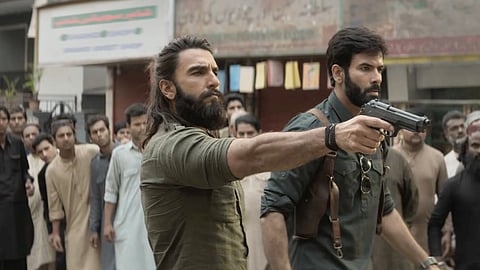
Released on December 5, the high-octane spy thriller is written and directed by Aditya Dhar. Starring Ranveer Singh in the lead role, the film traces covert intelligence operations against the backdrop of major geopolitical and terror-related events, including the Kandahar plane hijacking, the 2001 Parliament terror attack and the 26/11 Mumbai terror attacks. While some viewers have applauded its cinematic scale, gripping narrative and ambitious storytelling, others have criticised what they describe as an overtly hyper-nationalist tone and the extensive portrayal of violence, calling it unsettling and provocative.
Reports have also emerged that 'Dhurandhar' has been blocked from release in several Gulf countries due to its content. However, this is not the first instance of Indian films being restricted or banned in Gulf nations over sensitive themes or what is perceived as an anti-Pakistan narrative.
Reacting to the controversy, BJP national spokesperson Rohan Gupta told, "I don't think everything should be associated with religion. Dhurandhar is a film based on a true story, and the purpose of any film is to present reality to the audience." "Linking everything to religion, even creativity, doesn't seem right to me. The viewers should be allowed to exercise their own judgment about what feels right or wrong. Opposing creative work in the name of religion, I believe, is not a healthy mindset," he added.
BJP MP Bhim Singh also backed Gupta. "The film depicts terrorism, and it so happens that some terrorists are associated with Islam. If the terrorists happen to practise Islam, how is that the filmmakers' problem? There should not be any objection to the film," he said. However, opposition parties have taken a sharply different stand. Samajwadi Party spokesperson Ameeque Jamei accused the filmmakers of aligning themselves with the ruling establishment's narrative. Jamei said, "The acting in the film is commendable. However, by chance, this film has become part of the government's propaganda machinery. The James Bond shown in it is the same James Bond who was involved when we handed over a terrorist to Pakistan. Even during the attack on our Parliament, it was the same James Bond."
"The film gives a nice message to the people of Balochistan, which is a good thing. However, it should have been directed without the influence of the government, independently," he added. Congress MP Tariq Anwar also weighed in on the issue, urging scrutiny of the film's content in light of reported international bans. "I haven't seen it myself, but if several countries have banned it, one should check whether it contains any objectionable content that led Pakistan and other countries to take notice," he said.

