.png)
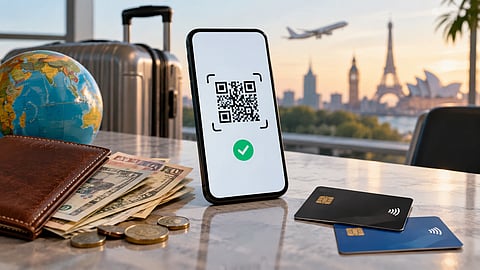
For Indian travellers, making a payment abroad can now feel much like paying at home. At participating merchants, a QR code scan and a UPI approval can be enough to complete a transaction.
With UPI now available across 11 countries, the payment system is becoming another option for Indians travelling overseas. But while the convenience is clear, cost is a separate question.
Is paying through UPI actually cheaper than using cash, a forex card or an international credit or debit card?
UPI may be convenient, but check the conversion cost
An overseas UPI transaction may not come with a separate fee that is immediately visible to the user. However, the exchange rate used to convert the payment into rupees can affect the final amount deducted from the linked Indian bank account.
The actual cost can depend on the exchange rate, currency conversion charges, bank fees and the payment instrument being used.
"International UPI gives travellers another convenient way to manage their spending overseas. But consumers should compare the complete cost of a transaction rather than assuming that one payment method will always be cheaper," Akshay Mehrotra, MD and Group CEO, Fibe, told NDTV.
For small purchases, a minor difference in the exchange rate may not be significant. But for hotel stays, shopping or large restaurant bills, even a modest markup can add to the overall cost.
Travellers should therefore check the exchange rate and any applicable forex or conversion charges rather than judging a payment method only by whether it shows a transaction fee.
Forex cards offer exchange-rate certainty
Forex cards can be useful for travellers who want to lock in an exchange rate before their trip. The rate is generally fixed when foreign currency is loaded onto the card, offering some certainty for planned spending.
However, the card itself can come with charges. Travellers should check fees for issuing, loading and reloading the card, as well as charges for overseas ATM withdrawals.
"Consumers should focus on the final INR cost of the transaction. A payment method may appear convenient or free at first glance, but the exchange rate and conversion charges can make a meaningful difference, especially during frequent or high-value transactions," Mehrotra says.
Cards and cash still have a role
International credit and debit cards can be competitive, particularly when they offer low or zero forex markups. However, travellers should be cautious if a merchant offers to charge the card in rupees instead of the local currency. Dynamic currency conversion may use a less favourable exchange rate.
Cash remains useful where digital payments are unavailable, but exchanging currency can involve a spread, while overseas ATM withdrawals may attract additional charges.
Why travellers should carry more than UPI
UPI's international expansion gives Indian travellers another way to pay, but acceptance is not universal. Availability can vary between destinations and merchants.
Travellers should check international UPI availability with their bank, understand transaction limits and review the exchange rate, INR amount and applicable charges before approving a payment.
They should also verify merchant details before entering their UPI PIN and never share the PIN or approve an unexpected payment request.
"UPI's international expansion is making overseas payments feel more familiar for Indian travellers. The larger shift is towards greater choice and flexibility, where consumers can use different payment options depending on the transaction and destination," Mehrotra added.


