.png)
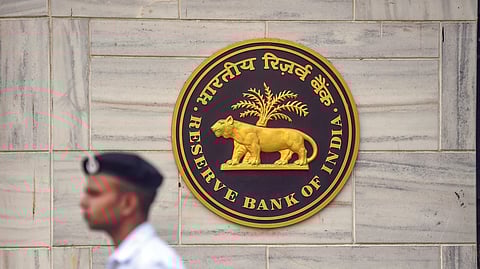
RBI proposes new capital rules for banks to cover risks from financial contracts

The Reserve Bank of India (RBI) has proposed new capital requirements for banks to ensure they maintain adequate buffers against risks arising from financial contracts, strengthening the regulatory framework for measuring counterparty exposures. The proposed norms are aimed at improving the way banks calculate potential losses arising from financial contracts and determine the amount of regulatory capital they need to set aside against such risks.
Focus on counterparty risk
Financial contracts can expose banks to the risk that another party to an agreement may fail to meet its obligations. This assumes particular importance in transactions involving derivatives and other instruments where a bank's exposure can change with movements in markets. The RBI's broader capital adequacy framework requires banks to maintain minimum capital against risk-weighted assets and other exposures, with different risks attracting different capital requirements. Under the proposed approach, banks would have to account more systematically for risks associated with financial contracts while determining their regulatory capital requirements.
Capital buffer against losses
The objective is to ensure that banks have sufficient capital available to absorb potential losses if counterparties to financial contracts default or are unable to fulfil their commitments. Such requirements are particularly significant for contracts whose values can fluctuate substantially over their lifetime, potentially increasing a bank's exposure before the contract matures. The framework would therefore strengthen the link between the level of risk undertaken by a bank and the amount of capital it is required to maintain.
Netting agreements in focus
A key consideration in calculating exposures from financial contracts is whether transactions can be offset or "netted" against each other. Under internationally used prudential approaches, qualifying master netting agreements can allow financial institutions to calculate exposure from certain contracts on a net rather than gross basis. This can reduce the measured exposure and, consequently, the capital requirement where legally enforceable netting arrangements are in place. The treatment is intended to more accurately capture the actual financial risk faced by a bank rather than simply adding together the gross value of individual transactions.
Strengthening banks' resilience
The proposed norms form part of the RBI's continuing effort to make India's banking system more resilient to market and counterparty risks. Capital adequacy regulations are designed to ensure that banks maintain financial resources proportionate to the risks on their balance sheets and off-balance-sheet exposures. RBI's prudential framework has long incorporated risk weights and minimum capital requirements for this purpose.
By refining the treatment of exposures arising from financial contracts, the proposed framework is expected to give regulators and banks a clearer assessment of potential losses while ensuring that adequate capital is available to absorb shocks. The proposals would also bring greater consistency to the calculation of counterparty exposures and help strengthen risk management practices across the banking sector.

