.png)
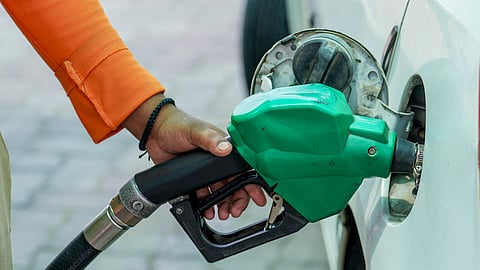
OMCs reject E20 contamination claims, say nationwide tests find fuel within prescribed limits
State-run oil marketing companies (OMCs) on Friday rejected concerns over the quality of E20 petrol, saying additional nationwide testing found no evidence to substantiate claims of high moisture or chloride contamination.
Indian Oil Corporation (IOC), Bharat Petroleum Corporation Ltd (BPCL) and Hindustan Petroleum Corporation Ltd (HPCL) said an intensified testing exercise covering the entire fuel supply chain showed that quality remained consistently within prescribed limits.
The exercise was undertaken following recent reports alleging the presence of excessive moisture and chloride in E20 petrol, which contains 20 per cent ethanol.
“Contrary to certain assertions being made, there is no evidence of any alarm on account of fuel contamination validated by extensive and scientifically designed tests,” the three companies said in a joint statement.
Testing stepped up nationwide
The OMCs said stringent specifications have been prescribed for chloride levels in ethanol used for petrol blending, with frequent monitoring undertaken at refineries, distilleries, depots, terminals and retail outlets.
Quality surveillance has also been strengthened through water-ingress and density checks conducted between eight and 12 times every day at each retail outlet.
Mobile fuel-quality testing laboratories have also been deployed, while results are being independently validated through fuel laboratories, the companies said.
Samples show low chloride
More than 100 additional petrol samples collected from refineries recorded chloride levels of 1 part per million (ppm) or lower.
Ethanol samples collected from 80 distilleries and tested over the past 10 days showed chloride content below 3 ppm, according to the OMCs.
Similarly, more than 80 samples taken from depots and terminals across the country recorded chloride levels below 3 ppm.
At retail outlets, more than 160 E20 samples tested over the past few days showed chloride levels ranging between 0 and 3 ppm.
The companies said these findings contradicted claims suggesting chloride concentrations running into several hundred ppm.
Two isolated cases detected
The enhanced surveillance exercise, however, detected two isolated instances where chloride levels were found to be elevated.
Supplies in both cases were immediately suspended while authorities initiated a root-cause analysis. The OMCs said corrective measures would be completed before supplies were restored.
Around 90,000 fuel retail outlets have also begun mandatory inspections of their underground storage tanks, with checks being carried out eight to 12 times every day.
No water ingress has been detected so far during these inspections, according to the companies.
Puri dismisses E20 concerns
Oil Minister Hardeep Singh Puri, speaking at a CII event earlier on Friday, dismissed concerns surrounding E20 fuel quality and said attempts were being made to “create some controversy” around India's ethanol-blending programme.
Puri said the ministry had intensified testing around two weeks before concerns over fuel quality were raised in a letter dated July 28.
Dedicated teams were subsequently deployed to carry out extensive inspections at fuel retail outlets across the country.
“They formed crack teams... What did they find? They found four cases out of 107,000 petrol pumps... So obviously, someone out there is trying to place some things out of context,” Puri said.
‘Isolated cases not systemic’
The minister said India has around 107,000 fuel retail outlets catering to an estimated six to seven crore customers every day.
Contamination, he said, could occur with any product, but isolated incidents should not be interpreted as evidence of a wider or systemic problem with E20 petrol.
The government's ethanol-blending programme has been under increased scrutiny amid concerns over the impact of E20 petrol on vehicles as well as questions surrounding fuel quality.
Results to be made public
The OMCs said tabulated results from the latest testing exercise have been made available on the website of the Centre for High Technology (CHT). The data will continue to be updated as additional test results become available.
The companies sought to reassure motorists that E20 petrol supplied through their networks complies with prescribed quality standards.
“Consumers should continue to use E20 petrol with confidence, as the fuel supplied through the OMC network conforms to the prescribed quality specifications and is backed by robust quality assurance and monitoring systems designed to safeguard consumer interests at every stage of the supply chain,” the companies said.
