.png)
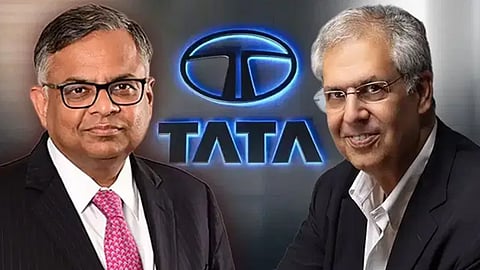
Noel Tata challenges Chandrasekaran’s reappointment, raises questions over TVS Motor dealings
Tata Trusts chairman Noel Tata has challenged the validity of N Chandrasekaran’s reappointment as executive chairman of Tata Sons, alleging procedural lapses in the board’s decision-making and questioning whether potential conflicts of interest involving TVS Motor Company were adequately disclosed.
In an eight-page letter dated October 26, addressed to Tata Sons company secretary Suprakash Mukhopadhyay and copied to the board of directors, Noel has described the September 17 resolution to reappoint Chandrasekaran for another five years as “void”. He has sought extensive records of the board meeting, including its original audio-video recording, transcript, voting details, conflict-of-interest declarations and legal opinions supporting the decision.
The challenge comes amid an escalating disagreement between Tata Trusts, which holds approximately 66% of Tata Sons, and the company’s board over Chandrasekaran’s continuation beyond February 2027. Tata Sons has maintained that the reappointment was valid and has relied on legal opinions in support of its position.
According to reports, Noel’s latest letter also seeks to establish whether the board had been informed about commercial arrangements between TVS Motor and Hanno One Warehousing, a company whose directors include Chandrasekaran’s wife, Lalitha, and son, Pranav. The letter questions the role of Venu Srinivasan, chairman emeritus of TVS Motor and a Tata Sons director, in the reappointment process.
Why Noel Tata disputes the board resolution
Chandrasekaran’s current term as executive chairman is due to expire in February 2027. At its September 17 meeting, the Tata Sons board approved a further five-year term for him, with the decision expected to take effect after his existing tenure ends.
Noel contends that the reappointment proposal was not properly included in the meeting agenda. According to his letter, neither the original nor the revised agenda explicitly mentioned a resolution to reappoint Chandrasekaran. Instead, the relevant item referred to a briefing from the Nomination and Remuneration Committee (NRC).
He has questioned why the proposal was considered under that item when the committee’s agenda and minutes had not been circulated to directors, as alleged in the letter.
Another objection concerns the absence of a selection committee under Article 118 of Tata Sons’ Articles of Association. Noel says a request to constitute such a committee was made on August 13 but was not acted upon.
The voting process is also central to his challenge. Noel argues that the resolution required an affirmative vote from directors appointed under Article 104B, read with the relevant provisions of the Articles of Association. He maintains that the required approval was not obtained.
The disagreement stems partly from the differing positions taken by the two Tata Trusts nominee directors on the Tata Sons board. Noel opposed Chandrasekaran’s reappointment, while Srinivasan supported it. Other directors who voted in favour included Anita George, Harish Manwani and Saurabh Agarwal.
Tata Sons relied on a legal interpretation under which the presiding chairman’s casting vote resolved the division between the nominee directors. Tata Trusts has challenged this interpretation, arguing that the affirmative votes required under the company’s Articles of Association were not secured.
Noel has also questioned why the reappointment resolution was certified and filed with the Registrar of Companies before the minutes of the September 17 meeting were finalised. He has sought details of when the certified resolution was issued, who authorised it and which documents were subsequently filed with the corporate regulator.
To establish the sequence of events, he has requested the original, unedited audio-video recording of the meeting, its transcript, the final signed minutes, individual voting records and all versions of the board agenda. He has also sought the audit trail showing changes made to meeting papers and a record of his objections and any revisions he requested.
The letter asks Tata Sons to formally inform the Registrar of Companies that the resolution’s validity is disputed and to refrain from taking further steps on the basis of the contested decision until the record has been settled.
Alleged TVS Motor dealings involving Chandrasekaran’s family
The second major issue concerns reported commercial arrangements between TVS Motor and Hanno One Warehousing, whose directors include Chandrasekaran’s wife, Lalitha, and son, Pranav. Hanno One is reported to be almost entirely owned by Hanno Infra LLP.
According to reports cited in Noel’s letter, TVS Motor leased approximately 17.41 acres of land near its Hosur facility in Tamil Nadu to Hanno One in June 2025 for 29 years, with the lease reportedly renewable at Hanno One’s option.
Hanno One is developing a facility of approximately 3.3 lakh square feet for TVS Motor. The project is estimated to cost around Rs 106 crore, and TVS Motor reportedly advanced Rs 27 crore to Hanno One in connection with the development.
Reports have also referred to a construction loan of approximately Rs 60 crore from HDFC Bank to finance part of the project, secured against Hanno One’s lease rights and the building.
A separate arrangement concerns a proposed industrial park near TVS Motor’s Mysuru factory. Estimated to cost around Rs 330 crore, the development is intended to serve TVS Motor and its suppliers.
Noel’s letter also refers to reported minutes of a Karnataka Land Audit Committee meeting dated November 6, 2025, in which a Hanno One representative was recorded as saying that the company had entered into an agreement with TVS Motor.
The transactions have become relevant to the reappointment dispute because of the relationship between Hanno One’s directors and Chandrasekaran’s immediate family.
Noel says he does not recall the reported commercial arrangements being disclosed to the Tata Sons board before it considered Chandrasekaran’s reappointment. He has sought copies of any disclosures made in April 2025, along with records showing whether the board or any committee examined them.
He has also requested documents establishing whether the legal advisers consulted on the reappointment were informed about the reported transactions.
Tata Sons’ position, as reported by Moneylife, is that Hanno One’s incorporation was disclosed in April 2025 to companies of which Chandrasekaran is chairman and that the TVS Motor transaction did not require disclosure to Tata Sons. Noel, however, says he does not recall any such disclosure being placed before the board.
The question raised in the letter is whether the relevant information was available to directors when they considered Chandrasekaran’s continuation as executive chairman, rather than simply whether the commercial arrangements existed.
Why Venu Srinivasan’s participation is being questioned
Noel has specifically questioned Srinivasan’s participation in the reappointment process because of his association with TVS Motor.
Srinivasan is chairman emeritus of TVS Motor, a Tata Sons director and a member of the company’s Nomination and Remuneration Committee. According to Noel’s letter, Srinivasan participated in the committee’s deliberations on September 3 and subsequently voted in favour of Chandrasekaran’s reappointment at the September 17 board meeting.
Noel argues that Srinivasan should have disclosed the reported business dealings between TVS Motor and Hanno One before taking part in either decision. He maintains that Srinivasan should have recused himself from both the committee’s deliberations and the board vote.
The letter notes that the disclosure recorded from Srinivasan at the September board meeting concerned his having ceased to be a director of TVS Group companies on June 10, 2026. Noel says no disclosure relating to Hanno One’s reported dealings with TVS Motor was recorded from Srinivasan or Chandrasekaran during the relevant discussions.
He has sought the directors’ declarations of interest, compliance confirmations and other documents concerning the transactions. He has also requested the NRC meeting notice, agenda, papers, minutes, attendance records and any available recording to establish whether the committee was informed about the arrangements before recommending Chandrasekaran’s reappointment.
The letter further asks whether the Tata Trusts’ August 13 requests for a selection committee were placed before the NRC and considered during its September 3 deliberations.
Noel argues that Srinivasan’s participation raises questions about the validity of the committee’s recommendation and the board decision that followed. These are allegations and objections raised in the letter, rather than findings of wrongdoing established by a court or regulator.
Tata Code of Conduct and disclosure obligations
Noel has invoked the Tata Code of Conduct, which requires directors to disclose actual or potential conflicts of interest. The code also addresses interests held by immediate family members in businesses that could give rise to conflicts.
His argument is that the disclosure requirements should be assessed in the context of the business relationships and family interests involved, rather than solely by examining a director’s direct financial interests.
He wants Tata Sons to establish whether the reported TVS Motor-Hanno One arrangements were disclosed, whether the directors concerned complied with their obligations and whether Srinivasan’s participation in the reappointment process was appropriate.
The documents sought include Form MBP-1 declarations, annual compliance affirmations and any amendments to declarations submitted by Chandrasekaran and Srinivasan for the financial years 2024-25, 2025-26 and 2026-27. He has also requested communications concerning Hanno One, records of any April 2025 disclosure and evidence of whether the board or a committee considered it.
Noel has questioned the legal opinions obtained in support of Chandrasekaran’s reappointment, including the instructions given to the advisers, the documents supplied to them and the authority under which their opinions were commissioned.
The letter seeks clarification on whether the reported Hanno One dealings were disclosed to the legal advisers and whether the potential conflict involving Srinivasan was considered. It also questions the timing and independence of the opinions obtained after the reappointment decision had been announced.
According to Moneylife, Noel’s letter refers to opinions by former Chief Justice of India Uday U Lalit and former Supreme Court judge B N Srikrishna, among others. It notes that Lalit’s opinion identified Harish Manwani, Anita George and Srinivasan as the persons seeking the opinion, all of whom voted in favour of Chandrasekaran’s reappointment. Noel has sought details of the instructions provided to the advisers and whether Tata Sons paid their fees.
The letter also invokes Article 121B and asks the board to consider the disclosures concerning Chandrasekaran and Srinivasan, the implications for the September 17 resolution, the constitution of a selection committee under Article 118 and the Reserve Bank of India’s letter dated September 11, 2026.
It also seeks consideration of the Tata Trusts’ September 28 proposal for the reorganisation of Tata Sons. Noel has requested that relevant papers be circulated at least seven days before the next board meeting and objected to specified matters being decided through circulation instead of at a properly convened meeting.
He has directed Tata Sons to preserve relevant records, including meeting recordings, agenda versions, board papers, disclosures, communications and legal opinions, without alteration or destruction. The letter reserves his rights and remedies and states that it should not be interpreted as acceptance of the validity of the reappointment resolution.
A wider dispute over Tata Sons’ governance
The latest challenge adds to an ongoing disagreement over the balance of authority between Tata Trusts and the Tata Sons board. Tata Trusts, which holds approximately two-thirds of Tata Sons, has questioned the legality of Chandrasekaran’s reappointment, while the company has maintained that the board acted within its governance framework.
The dispute has also brought the interpretation of the company’s Articles of Association, the role of nominee directors and the use of a casting vote under scrutiny. The outcome could depend on the relevant corporate documents, the board’s records and the legal interpretations applied to the September decision.
More broadly, the controversy highlights the governance challenges faced by large business groups in which ownership, family interests and professional management intersect.
Agamjeet Dang, chief executive of Executive Access, told NDTV that professionalising a business involves more than appointing an outside or professional leader. He said the process also requires owners to allow management to lead independently.
Dang added that ownership, management and governance often remain closely connected in family businesses, even after a professional executive takes charge. The central test, he said, is whether promoters are willing to cede sufficient control for management to operate independently while allowing boards to function as effective institutions of governance.


