.png)
India within striking distance of 8% growth, Shaktikanta Das calls for sustained reforms
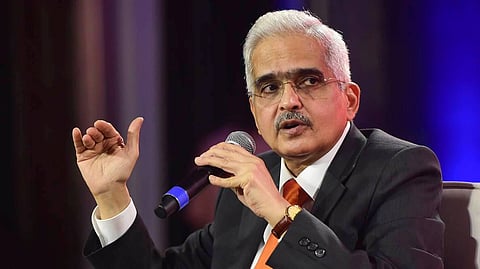
India must sustain its reform momentum and continue building long-term productive capacity to achieve resilient and sustainable growth, Shaktikanta Das, Principal Secretary-2 to the Prime Minister, said on Sunday, arguing that the economy’s ability to withstand successive global shocks was the result of reforms undertaken over the past decade.
Addressing the Kautilya Economic Conclave in New Delhi, Das said India was now at a pivotal stage of its development journey. Its strategy, he said, could no longer be simply about achieving rapid growth but must focus on ensuring that growth remains sustainable and resilient over the long term.
8% growth within reach
Das said India was within striking distance of 8% economic growth. Real GDP expanded 7.8% in the first quarter of FY27, supported by strong domestic demand and investment conditions, while average annual growth during the five years from FY22 to FY26 stood at 7.9%.
He said that measured across the four quarters from July-September 2025 to April-June 2026, India’s real GDP growth had exceeded 8%. The performance came despite a difficult international environment marked by wars, geopolitical fragmentation, unilateralism, technology restrictions, volatile energy prices and inflationary pressures.
Das warned that the interplay of these global forces was generating uncertainty, potentially restraining world growth and contributing to tighter monetary conditions. High public debt in several advanced economies was also pushing up bond yields and limiting their fiscal capacity to respond to future shocks.
Resilience ‘not accidental’
Das said India’s economic resilience was not accidental but the outcome of broad and mutually reinforcing reforms. He identified stronger governance and state capacity, macroeconomic stability and investment in productive capacity as three broad pillars supporting the economy.
Among the reforms highlighted were flexible inflation targeting, fiscal consolidation, the Goods and Services Tax, expansion of digital payments, financial-sector reforms and prudent management of the external sector.
India’s digital public infrastructure has also played a significant role. Das said the Jan Dhan-Aadhaar-Mobile framework enabled rapid delivery of financial assistance during the Covid-19 pandemic and helped improve the efficiency of welfare programmes.
Direct benefit transfers had generated estimated savings of around Rs 5.1 lakh crore by reducing leakages, he said.
Banks emerge stronger
Das described the restoration of financial-sector health as another defining element of India’s improved resilience. Measures such as the Insolvency and Bankruptcy Code, bank recapitalisation and stronger regulatory oversight had helped address stressed assets and strengthen bank balance sheets.
Gross non-performing assets of banks had declined to 1.68% in June 2026, while profitability had improved significantly.
The external sector had also remained broadly resilient, supported by diversified exports, services trade, remittances and trade agreements. India’s current account deficit stood at 0.6% of GDP in FY26.
Infrastructure builds capacity
Investment in infrastructure, logistics, energy and manufacturing constituted the third major pillar identified by Das.
Programmes including PM Gati Shakti, the National Logistics Policy, Sagarmala and UDAN had improved connectivity and helped reduce economic friction. India’s position in the World Bank’s Logistics Performance Index improved from 54 in 2014 to 38 in 2023, with the country targeting a place among the top 25 by 2030.
Das also pointed to diversification of India’s energy mix across fossil fuels, renewable energy, biofuels and nuclear power as an important buffer against external energy shocks.
Manufacturing capacity was expanding through production-linked incentive schemes, semiconductor investments, automation and Industry 4.0 technologies, he said.
Five priorities ahead
Looking towards the next phase of India’s development, Das identified five areas requiring sustained attention — artificial intelligence, deeper financial markets, strategic self-reliance, sustainable development and human capital.
He said AI offered significant opportunities to improve productivity, healthcare, education, scientific research and public service delivery. At the same time, India would have to address challenges involving cybersecurity, data governance, algorithmic bias and AI safety.
A larger economy would also require deeper sources of long-term finance. Das called for strengthening corporate bond markets, pension and insurance funds, municipal finance, infrastructure financing and green and transition finance.
Self-reliance without isolation
Das stressed that strategic self-reliance should not be interpreted as economic isolation. India, he said, needed to strengthen domestic capabilities while remaining integrated with global markets and participating more deeply in international supply chains.
Building domestic capacity in strategic manufacturing, defence production, critical technologies and import-dependent areas would be important. Rare-earth permanent magnets are among the areas where the government is seeking to expand domestic capability.
Sustainable development would form another pillar of the next growth phase, with green hydrogen, electric mobility, energy-efficient infrastructure, sustainable agriculture and circular-economy practices expected to assume greater importance.
Das said continued investment in education, skills and human capital would be equally important as technological change reshaped industries and employment. Sustaining reforms across these areas, he said, would be critical as India works towards its Viksit Bharat 2047 goal.


