.png)
India-New Zealand trade pact likely to come into force in October
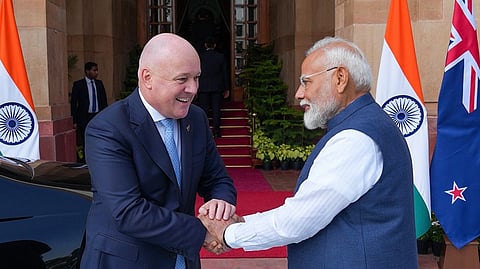
The India-New Zealand Free Trade Agreement (FTA) is likely to come into force in October, government sources said on Thursday, paving the way for expanded market access and investment flows between the two countries. The agreement was signed on April 27 in New Delhi by Commerce and Industry Minister Piyush Goyal and New Zealand Trade and Investment Minister Todd McClay in the presence of New Zealand Prime Minister Christopher Luxon.
The pact will provide duty-free access to 100 per cent of Indian exports to New Zealand from the date it comes into force, covering more than 8,200 tariff lines. Key beneficiaries are expected to include textiles and apparel, leather, footwear, engineering goods, processed food, pharmaceuticals, electronics, electrical machinery, marine products and chemicals.
Trade target set
India and New Zealand have set an aspirational target of doubling bilateral trade in goods and services to NZD 7 billion, approximately Rs 35,000 crore, by 2030. The agreement also carries a $20 billion investment commitment from New Zealand over 15 years, covering areas including manufacturing, infrastructure, services, innovation and job creation.
Before the agreement, several major Indian exports to New Zealand faced tariffs of up to 10 per cent, including ceramics, carpets, automobiles and auto components. Elimination of these duties is expected to improve the competitiveness of Indian products in the New Zealand market.
The two countries had first begun negotiations for a trade agreement in 2010, but the process stalled. Talks were relaunched during Luxon's visit to India in March 2025 and concluded in December after five formal rounds of negotiations.
Sensitive sectors protected
India has kept nearly 30 per cent of its tariff lines outside the concessions offered to New Zealand, protecting several sensitive domestic sectors.
Dairy products, including milk, cream, whey, yoghurt and cheese, are among the major exclusions. Several agricultural products such as onions, chana, peas and corn, along with sugar, edible oils and certain gems, jewellery and metal products, have also been protected.
New Zealand, meanwhile, will receive preferential or reduced-tariff access for several products, including wool, wood, wine, avocados and blueberries, while apples and kiwifruit will receive quota-based tariff concessions.
The pact also goes beyond merchandise trade, covering services, professional mobility and education. It provides new opportunities for Indian professionals and includes provisions relating to student mobility and post-study work opportunities for STEM graduates.
New Zealand is currently completing its domestic process required to implement the agreement. Its Parliament is considering legislation necessary to align domestic laws with obligations under the FTA.
Once both countries complete their respective procedures, the agreement will take effect on a mutually agreed date, with government sources indicating October as the likely implementation window.


