.png)
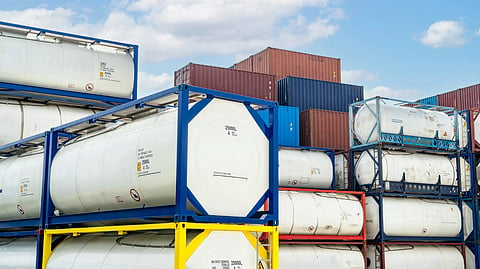
Govt proposes three-year permits and stricter safety norms for petroleum transport in ISO tanks

The government has proposed extending permissions for importing and transporting petroleum in ISO tank containers to as long as three years while introducing tighter safety requirements and a time-bound approval mechanism. The measures form part of draft amendments to the Petroleum Rules, 2002, aimed at simplifying regulatory processes without diluting safety and inspection requirements.
The Ministry of Petroleum and Natural Gas has issued the draft Petroleum (Amendment) Rules, 2026, inviting objections and suggestions from stakeholders for 30 days. Under the proposals, ISO tank containers filled or intended to be filled with petroleum cannot be imported without permission from the Chief Controller or Controller.
Faster approval process
Applicants would be required to approach the authorities through the online licensing portal of the Petroleum and Explosives Safety Organisation (PESO) and submit prescribed technical and safety documents. These include inspection and test reports, design drawings, hydro-test and container safety certificates, approved mounting drawings and safe operating procedures.
Import permissions could remain valid for a maximum of three years. Significantly, the government has proposed a deemed-approval mechanism under which a complete application would be considered approved if no deficiency or written objection is communicated through the portal within seven working days.
The draft also allows combined permission for importing ISO tank containers and transporting Class A or Class B petroleum by road within India for up to three years. Existing transport permissions, currently valid for one year, are proposed to be extended to three years. Where periodic inspection or hydro-test certificates remain valid, permissions could be extended for up to three years or until the certificate expires, whichever is earlier.
Stricter safety requirements
Alongside longer permits, the government has proposed a new schedule specifying precautions for vehicles transporting petroleum in ISO tanks. At least two responsible persons would have to accompany a vehicle during transportation. Vehicles would also be required to carry a portable fire extinguisher with a capacity of at least nine litres, oil-tight hoses and an electrical bonding cable.
The proposals also seek to streamline no-objection certificates for petroleum licences by requiring District Fire Officers to complete inquiries and either issue or refuse an NOC within one month. Certain notified areas under ports, airports, railways, the Indian Space Research Organisation and the Department of Atomic Energy could be exempted from the requirement, subject to approval from the competent authority.
If finalised, the changes would provide petroleum importers and transporters with longer regulatory certainty and faster approvals while strengthening safety requirements governing the movement of hazardous petroleum products.

