.png)
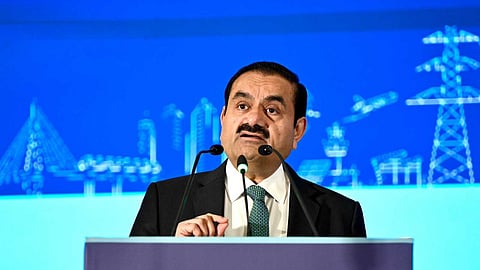
Gautam Adani calls for new credit framework for India’s large infrastructure platforms

Adani Group chairman Gautam Adani on Monday called for a new credit assessment framework for India’s large infrastructure platforms, arguing that conventional project-level lending models fail to adequately recognise the strength and resilience of diversified businesses operating across multiple infrastructure sectors.
Speaking at the National Infrastructure Financing Summit in Mumbai, Adani said India’s next phase of infrastructure expansion would require financial institutions to rethink how they evaluate large platforms spanning sectors such as ports, airports, energy, transmission, logistics and digital infrastructure.
Calls for portfolio-level assessment
Adani argued that lenders traditionally assess individual projects or companies largely through standalone leverage and cash-flow metrics. Such an approach, he said, may not accurately capture the financial strength of integrated infrastructure groups with diversified revenue streams and assets across different sectors.
He proposed a framework under which large infrastructure platforms could be assessed on the basis of consolidated cash flows, the diversification of their asset portfolios and their ability to withstand stress across individual businesses.
According to Adani, a diversified infrastructure platform can absorb shocks more effectively because weakness in one segment can potentially be offset by stronger performance elsewhere. Credit evaluation, therefore, should recognise the resilience created by multiple cash-generating assets instead of examining every business solely in isolation.
He said India requires financing structures suited to the scale and duration of infrastructure investment, particularly as projects typically involve high initial capital expenditure and generate returns over long periods.
Long-term capital crucial
Adani also stressed the importance of expanding access to patient, long-duration domestic capital. Infrastructure projects often have asset lives stretching across several decades, making them poorly suited to financing structures dominated by shorter-duration liabilities.
He said pension funds, insurance companies and other pools of long-term savings could play a significantly larger role in financing infrastructure if appropriate regulatory and credit frameworks were developed.
India’s infrastructure ambitions across renewable energy, electricity transmission, transportation, urban development and digital networks will require enormous amounts of capital over the coming years. Adani said the country’s financing architecture must evolve alongside the increasing scale and complexity of such projects.
The billionaire industrialist also highlighted the importance of deepening India’s corporate bond market, arguing that infrastructure financing cannot remain excessively dependent on bank lending.
Financial architecture must evolve
Adani said India had demonstrated its ability to execute infrastructure projects at unprecedented scale but now needed an equally sophisticated financial ecosystem capable of supporting the next phase of expansion.
He argued that assessing diversified infrastructure groups purely through traditional corporate leverage ratios could overlook their underlying asset quality, predictable cash flows and portfolio diversification.
A more contemporary framework, he suggested, should examine the overall resilience of infrastructure platforms while maintaining appropriate safeguards for lenders and investors.
The remarks come as India seeks massive investment in roads, railways, airports, ports, renewable energy, electricity networks and digital infrastructure to support its long-term economic growth.
Adani said developing deeper domestic pools of patient capital and modernising credit assessment could help reduce financing constraints and enable Indian infrastructure companies to undertake larger, longer-term projects without becoming excessively dependent on foreign capital.

