.png)
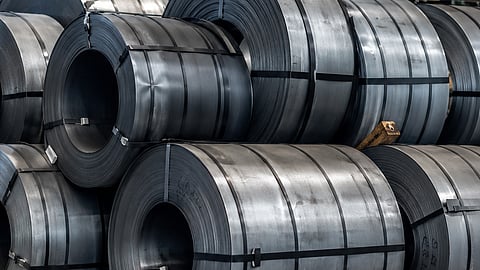
Centre unveils draft steel policy targeting 604 MT capacity by 2047
The government has released the draft National Steel Policy 2047, outlining an ambitious roadmap to increase India's crude steel production capacity to 604 million tonnes (MT) by 2047, strengthen domestic manufacturing, reduce dependence on imported raw materials and improve the industry's global competitiveness.
The proposed policy projects finished steel demand reaching 505 MT by 2047, with per capita consumption rising to 302 kg and steel exports touching 45 MT. It also places considerable emphasis on decarbonisation, technological modernisation, resource security and the development of high-value steel products.
The policy is intended to address emerging challenges that were not adequately covered under the National Steel Policy 2017, particularly the growing importance of artificial intelligence, digital manufacturing, cleaner production technologies and changes in global trade patterns.
Reducing import dependence
Raw materials account for approximately 65-70 per cent of steelmaking costs, making their availability and pricing critical to the industry's competitiveness.
Although India is largely self-sufficient in iron ore, it imports nearly 92 per cent of its coking coal requirements, exposing steel producers to international price fluctuations and supply disruptions.
To address this dependence, the draft policy proposes expanding domestic mining, increasing coal-washing capacity, acquiring overseas mineral assets and securing long-term supply arrangements.
It also advocates the use of artificial intelligence to optimise coal blends and improve the efficiency of steelmaking operations. Other essential raw materials, including manganese and limestone, will remain within the policy's focus to ensure long-term resource sustainability and uninterrupted production. The government also proposes diversifying sourcing arrangements and strengthening international partnerships to improve supply-chain resilience.
Support for smaller producers
The draft policy recognises the importance of India's secondary steel sector, which comprises approximately 2,550 units and accounts for nearly 47 per cent of the country's crude steel production capacity.
These producers will receive support to improve access to raw materials, adopt modern technologies, strengthen workforce skills and enhance workplace safety. The proposed measures are intended to help smaller steel manufacturers improve productivity and compete more effectively with larger integrated producers. The policy also envisages developing downstream manufacturing clusters and encouraging greater domestic value addition.
Focus on green steel
Decarbonisation forms a central pillar of the proposed policy, reflecting the significant contribution of steelmaking to India's greenhouse gas emissions. The steel industry accounts for approximately 10-12 per cent of the country's carbon dioxide emissions. Its average emission intensity stands at 2.54 tonnes of carbon dioxide per tonne of crude steel, considerably higher than the global average of 1.92 tonnes.
The draft policy outlines a phased transition towards India's net-zero emissions target for 2070 through improved energy efficiency, increased renewable electricity consumption, greater use of scrap steel and the adoption of hydrogen-based technologies.
It also proposes strengthening the domestic scrap collection and processing ecosystem to encourage recycling and reduce the environmental impact of primary steel production. The transition is expected to require substantial investments in cleaner technologies, supporting infrastructure and industrial innovation.
Technology and quality upgrades
The policy identifies digital transformation as a major priority, with a focus on Industry 4.0 technologies, common data standards, digital infrastructure and artificial intelligence-driven production systems. It envisages greater adoption of trusted AI, automation and autonomous manufacturing processes to improve operational efficiency, product quality and resource utilisation.
The government also proposes establishing Centres of Excellence to promote indigenous technological development, research and innovation. Speciality steel, stainless steel and other high-value products will receive greater attention to reduce reliance on imported technology and materials while strengthening India's presence in advanced manufacturing markets. The draft further proposes demand aggregation and downstream industrial clusters to encourage the domestic production and consumption of value-added steel.
Import monitoring strengthened
The government intends to continue measures aimed at discouraging imports of substandard and low-quality steel through revised Indian Standards, stronger conformity assessment mechanisms and AI-supported import monitoring. Trade remedial measures will also be considered to protect domestic producers from unfair trade practices, while exports of high-quality Indian steel will be encouraged.
International cooperation will be expanded in areas such as raw material diversification, steel trade and technology partnerships. The policy envisages closer collaboration with other steel-producing nations to strengthen India's position in global supply chains and improve access to emerging technologies.
Building on 2017 policy
The National Steel Policy 2017 had set a target of increasing India's steelmaking capacity to 300 MT by 2030 and raising per capita steel consumption to 160 kg. Since then, the industry has recorded substantial growth. India's crude steel production increased from approximately 89 MT in 2014-15 to 170 MT in 2025-26, while finished steel consumption more than doubled from 77 MT to 164 MT during the same period.
However, India's per capita steel consumption remains relatively low at 116 kg in 2025-26, compared with the global average of 209 kg, indicating considerable scope for expansion as infrastructure development, urbanisation and manufacturing activity accelerate.
India is currently the world's second-largest producer and consumer of steel. Steel Secretary Sandeep Poundrik recently said the 2017 policy needed to be revisited in light of changing industry requirements and emerging challenges. He highlighted the increasing importance of artificial intelligence, machine learning and technological upgrades, alongside India's growing role in global steel production and consumption.
The draft National Steel Policy 2047 seeks to build on these developments by establishing a longer-term framework for expanding capacity, improving competitiveness and ensuring that the sector's growth is supported by sustainable resources and modern technologies.


