.png)
Rubio says India-US trade deal close, urges New Delhi to boost US energy and defence buys
India and the United States on Tuesday moved to deepen cooperation in energy, defence and technology despite continuing friction in bilateral relations, with US Secretary of State Marco Rubio urging New Delhi to expand energy trade and increase purchases of American technologies and systems.
External Affairs Minister S Jaishankar hosted Rubio for wide-ranging talks shortly after the US diplomat arrived in Mumbai for his second visit to India in less than five months.
The discussions took place against the backdrop of differences over Washington's trade policies, India's purchases of Russian oil and tightening US immigration regulations.
The Ministry of External Affairs (MEA) said both countries welcomed progress in negotiations on the proposed India-US Bilateral Trade Agreement and reaffirmed their commitment to its early conclusion.
𝗧𝗿𝗮𝗱𝗲 𝗱𝗲𝗮𝗹 𝗻𝗲𝗮𝗿𝘀 𝗰𝗼𝗺𝗽𝗹𝗲𝘁𝗶𝗼𝗻
Ahead of his meeting with Jaishankar, Rubio indicated that the two countries were close to finalising the trade agreement, with only a few outstanding issues remaining.
"I would say we're about as close as you can be without having an executed agreement," Rubio told reporters.
He said a small number of matters remained to be resolved and expressed hope that the agreement could be announced shortly, potentially followed by its signing by the leaders of both countries.
Following the meeting, Jaishankar said the discussions focused on advancing cooperation in trade, energy, technology, defence and people-to-people relations.
In a statement issued later in the evening, the MEA said both sides reviewed the entire spectrum of bilateral relations and explored ways to strengthen the Comprehensive Global Strategic Partnership.
The two ministers also exchanged views on regional and global developments, including the situation in West Asia.
𝗥𝘂𝗯𝗶𝗼 𝘀𝗲𝗲𝗸𝘀 𝗴𝗿𝗲𝗮𝘁𝗲𝗿 𝗲𝗻𝗲𝗿𝗴𝘆 𝘁𝗿𝗮𝗱𝗲
The US State Department said Rubio emphasised that increased energy trade with the United States could help India diversify its supply chains while meeting growing domestic demand.
He also welcomed progress in bilateral defence and civil nuclear cooperation and advocated greater purchases of American technologies and systems.
Responding to questions about India's Russian oil imports, Rubio acknowledged that New Delhi had made progress in diversifying its energy portfolio.
"I think what India has expressed repeatedly is its desire to diversify its energy portfolio, which is a smart thing to do. Obviously, it's not easy to do that from one day to the next day," he said.
Rubio maintained that the United States could become an important supplier of India's energy requirements.
He said Washington viewed India's efforts to diversify energy imports positively and was interested in expanding cooperation beyond the issue of Russian crude.
𝗜𝗻𝗱𝗶𝗮 𝗮 𝗿𝗲𝗳𝗶𝗻𝗶𝗻𝗴 𝘀𝘂𝗽𝗲𝗿𝗽𝗼𝘄𝗲𝗿
Describing India as a crude oil refining "superpower", Rubio highlighted the country's capacity to process Venezuelan crude and indicated that the issue would feature in discussions during his visit to Reliance Industries' Jamnagar refinery on Wednesday.
"India is a refining superpower. They have the ability to do that, and they have companies that know how to do that," he said.
Rubio noted that certain Indian companies already possessed oil concessions in Venezuela, providing a foundation for expanded cooperation.
He acknowledged that Venezuelan supplies alone could not immediately compensate for disruptions affecting global energy markets but said they could contribute to diversification over time.
The US Secretary of State also highlighted the strategic importance of energy security, arguing that shortages could destabilise economies and contribute to international conflicts.
"Energy is related to national security. Countries fight wars over energy; economies collapse over lack of energy," he said.
Referring to developments in the Strait of Hormuz and attacks on Saudi Arabian energy infrastructure, Rubio said disruptions had affected supplies and contributed to diesel shortages in several countries.
𝗗𝗲𝗳𝗲𝗻𝗰𝗲, 𝗻𝘂𝗰𝗹𝗲𝗮𝗿 𝗰𝗼𝗼𝗽𝗲𝗿𝗮𝘁𝗶𝗼𝗻 𝗿𝗲𝘃𝗶𝗲𝘄𝗲𝗱
The State Department said Rubio and Jaishankar discussed expanding defence cooperation and advancing civil nuclear engagement.
Rubio welcomed recent progress in these areas and encouraged India to increase procurement of US technologies and systems.
US Ambassador to India Sergio Gor, who attended the meeting, described the discussions as productive and said both countries were working to strengthen cooperation across defence, energy, emerging technologies and trade.
The MEA said Rubio's visit reflected sustained high-level diplomatic engagement and underscored the importance both governments attached to advancing their strategic partnership.
𝗟𝗲𝗮𝗱𝗲𝗿𝘀 𝗽𝗮𝘆 𝘁𝗿𝗶𝗯𝘂𝘁𝗲 𝘁𝗼 𝟮𝟲/𝟭𝟭 𝘃𝗶𝗰𝘁𝗶𝗺𝘀
Before their bilateral talks, Rubio and Jaishankar laid wreaths at the memorial for victims of the November 26, 2008, Mumbai terror attacks at the Taj Mahal Palace Hotel.
The attacks claimed 166 lives, including those of six American citizens.
Jaishankar reiterated the importance of continued cooperation against terrorism in all its forms and manifestations.
Rubio said the United States remembered the victims and honoured the courage of those who responded to the attacks.
He reaffirmed the two countries' shared commitment to combating terrorism.
𝗝𝗮𝗶𝘀𝗵𝗮𝗻𝗸𝗮𝗿 𝗳𝗹𝗮𝗴𝘀 𝗰𝗵𝗮𝗻𝗴𝗶𝗻𝗴 𝘄𝗼𝗿𝗹𝗱 𝗼𝗿𝗱𝗲𝗿
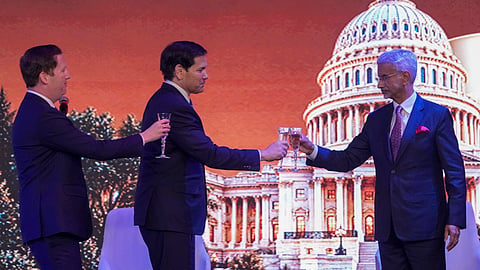
Addressing a reception marking 250 years of American independence, Jaishankar acknowledged that India and the United States had experienced differences but said their partnership had expanded steadily over recent decades.
He highlighted the contribution of Indian talent and skills to the development of America's technology sector.
The External Affairs Minister said deeper cooperation was particularly important at a time when the international order was undergoing significant changes.
"Each one of us will naturally pursue our national interest. In such an era, expanding our convergence is key to deepening our ties," he said.
Jaishankar identified trade, investment, technology and energy as areas offering new opportunities, while emphasising the shared interest of both countries in maintaining peace and stability in the Indo-Pacific.
𝗧𝗶𝗲𝘀 𝗳𝗮𝗰𝗲 𝘁𝗿𝗮𝗱𝗲, 𝗶𝗺𝗺𝗶𝗴𝗿𝗮𝘁𝗶𝗼𝗻 𝗰𝗵𝗮𝗹𝗹𝗲𝗻𝗴𝗲𝘀
India-US relations have faced significant challenges following Washington's imposition of punitive tariffs on Indian goods last year and President Donald Trump's claims regarding his role in de-escalating the India-Pakistan military confrontation in May 2025.
New Delhi has disputed Trump's assertions about American involvement in ending the hostilities.
The US administration's tightening of immigration rules and increases in H-1B visa fees have added to concerns affecting the bilateral relationship.
More recently, restrictions on a key green-card processing programme involving major international and Indian IT companies, including Tata Consultancy Services and Wipro, have created further uncertainty.
Despite these differences, both governments have continued high-level diplomatic engagement, with Tuesday's discussions focusing on expanding areas of cooperation while negotiations on the bilateral trade agreement approach their final stages.


